2026 Best Valve DC Gear Motor Features and Applications?
The world of automation continues to evolve, and the Valve DC Gear Motor is at the forefront. This crucial component is designed to enhance efficiency in various applications, from robotics to industrial machinery. Renowned expert Dr. Sarah Johnson once stated, “The Valve DC Gear Motor is revolutionizing automation by offering precision and reliability.”
In 2026, we will see even more remarkable features in these motors. Improved torque, compact size, and energy efficiency are leading the way. However, the rapid advancement raises questions about reliability and maintenance. Engineers must adapt to these changes, ensuring optimal performance without compromising safety.
Real-world applications highlight the versatility of the Valve DC Gear Motor. From controlling valve actuators in oil and gas industries to functioning in robotic arms, the scope is vast. Yet, with innovation comes the challenge of integration. As technology progresses, manufacturers and users will need to rethink their approaches. Understanding the features of the Valve DC Gear Motor is essential for future success.
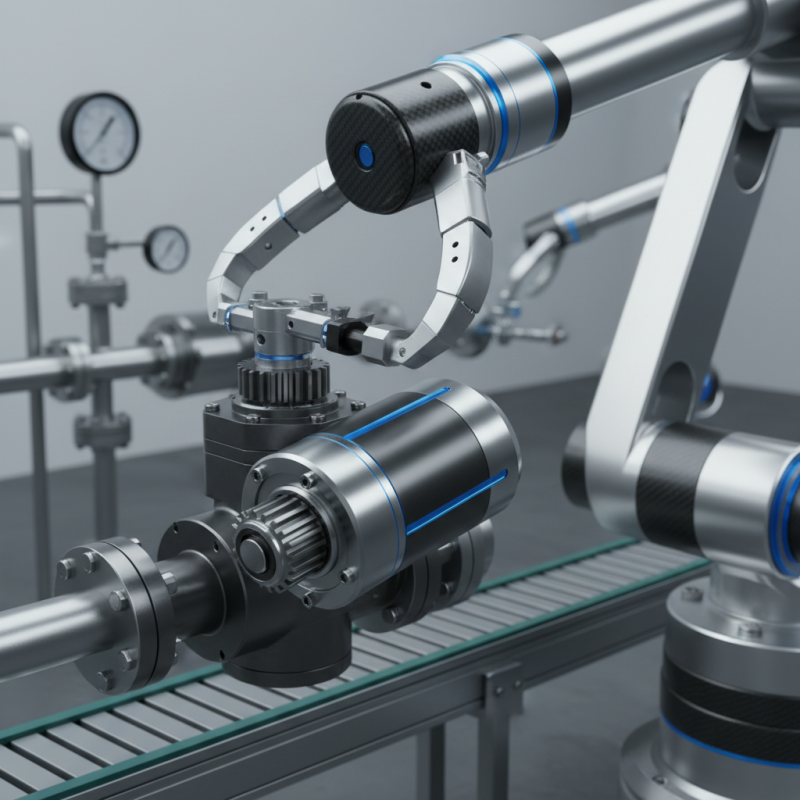
2026 Overview of DC Gear Motors in Valve Applications
DC gear motors play a crucial role in valve applications. These motors enhance precision in movement and control. With an appropriate gear ratio, they optimize torque and speed for various tasks. This optimization is essential for operations like opening and closing valves smoothly. A well-functioning motor can prevent overheating, a common issue when running machines under heavy loads.
One notable application involves automated systems in industrial settings. These systems require reliable components to maintain efficiency. The integration of DC gear motors allows for seamless control. However, not all motors perform equally. Some may suffer from lower efficiency or inconsistent performance. These drawbacks highlight the need for careful selection based on specific requirements.
In addition to industrial uses, DC gear motors have applications in residential settings. They can be found in automatic irrigation systems or HVAC controls. Even in these smaller systems, precision and reliability matter greatly. Motor failure in such devices can lead to costly repairs and time waste. Regular maintenance and checks can help address these issues, improving reliability over time.
Key Features of 2026 Best Valve DC Gear Motors
When considering the features of the 2026 best valve DC gear motors, it's essential to focus on their efficiency and versatility. These motors exhibit high torque output, which makes them suitable for various applications. Their compact design allows easy integration into tight spaces. Users often appreciate their low noise levels during operation, making them ideal for residential areas.
Another key feature is their precise control capabilities. This ensures that users can achieve accurate positioning in automated settings. Many motors also come with customizable speed options, allowing for flexibility in operation. Enhanced durability is a notable aspect as well, with materials designed to withstand harsh environments.
However, potential users should reflect on the installation complexities. While these motors offer robust performance, improper setups can lead to inefficiencies. It's crucial to consider your specific needs and the intended application. Balancing features against usability is key for optimal performance. The design may seem perfect at first glance, yet overlooking installation can yield disappointing results.
Popular Applications for Valve DC Gear Motors in 2026
Valve DC gear motors have found numerous applications across various industries in 2026. In automation systems, they control the flow of liquids and gases with precision. These motors provide excellent torque at low speeds, enabling efficient control for processes like mixing and packaging. In irrigation systems, they optimize water flow, which can significantly enhance crop production.
Smart home devices also leverage valve DC gear motors. They enable automatic adjustments of heating and cooling systems. These motors can respond quickly to temperature changes, contributing to energy efficiency. However, their reliance on sensors can lead to potential failures if not regularly maintained. This raises concerns about the reliability and lifespan of these systems.
In robotics, valve DC gear motors allow for precise movements. They facilitate tasks such as valve operation in robotic arms. Yet, achieving optimal performance requires careful integration with control systems. Misalignment can cause inefficiencies, highlighting the need for ongoing adjustments and possible redesigns. These aspects reveal that while valve DC gear motors excel in functionality, they also necessitate a commitment to continuous improvement and monitoring.
Comparative Analysis of Top Valve DC Gear Motors Available in 2026
In 2026, various valve DC gear motors are leading the industry. These motors vary in voltage, torque, and efficiency. A notable feature is their compact design, which saves space in machinery. Many users appreciate the quieter operation of newer models. Yet, some designs still produce more noise than expected.
Moreover, the efficiency of these gear motors continues to improve. Some models offer superior performance in temperature control and energy consumption. However, many potential buyers face difficulties in assessing their specific needs. Not all motors perform consistently in real-world applications. Users might find that advertised specifications don’t match actual performance.
Flexibility remains a critical strength. Different applications require different gear ratios and sizes. Some motors excel in high-speed applications, while others are designed for torque-heavy tasks. Unfortunately, this diversity can complicate the selection process. Accurate matching between the motor and its application is often overlooked. Users must carefully analyze their requirements and not rush into decisions.
Future Trends in Valve DC Gear Motor Technology Beyond 2026
As we peer into the horizon of valve DC gear motor technology beyond 2026, we witness an intriguing interaction of innovation and practicality. According to a recent industry report, the demand for compact and energy-efficient motors is projected to surge by 25% over the next five years. This surge will be driven by advancements in materials and the increasing need for automation in various sectors.
Emerging trends, such as the integration of IoT, promise to enhance motor performance and connectivity. These motors will likely feature smart sensors, providing real-time data analytics. This capability can optimize energy consumption and maintenance schedules, leading to sustainability. However, the challenge lies in standardizing these technologies across industries to ensure seamless integration.
**Tip:** Consider updating your existing systems to adapt to this shift. Future-proofing your technology can mitigate risks associated with obsolescence.
Moreover, sustainable manufacturing practices are also gaining momentum. Industry leaders are focusing on eco-friendly materials, reducing environmental footprints. However, many companies still struggle with transitioning to greener alternatives effectively. Balancing innovation with responsibility remains a crucial consideration as we advance in this field.
**Tip:** Evaluate your supply chain and include sustainability criteria to enhance your operational impact. Every small shift counts.