
2026 Top Hydraulic Hose Fittings Types for Global Buyers?

Choosing the right hydraulic hose fittings can determine whether a fluid power system runs smoothly or fails under pressure. For global buyers in 2026, the decision involves more than thread size. Material, pressure rating, hose compatibility, temperature range, sealing method, and regional standards all require careful review. A fitting may look suitable on a clean warehouse shelf, yet perform poorly beside heat, vibration, dust, or corrosive fluid.

This guide examines the leading hydraulic hose fittings types used across construction equipment, agriculture, mining, manufacturing, and mobile machinery. It covers crimp fittings, reusable fittings, one-piece fittings, adapters, quick couplings, flange connections, and common thread profiles. Each section connects product design with real purchasing concerns, such as installation time, leakage risk, replacement access, and long-term maintenance. Clear technical specifications matter.

Reliable selection begins with verified data. Buyers should compare manufacturer catalogues, pressure tests, material certificates, and applicable industry standards. Experienced engineers also check the actual hose assembly, not only the fitting body. Small differences can matter. A metric thread is not automatically interchangeable with a similar-looking imperial thread. This mistake remains common.

This is not a perfect checklist. Field conditions often expose details that laboratory testing cannot predict. Still, practical inspection, supplier transparency, and traceable quality records can reduce costly errors. The goal is not to choose the most expensive connection. It is to choose a safe, compatible, and serviceable solution for the intended hydraulic system.
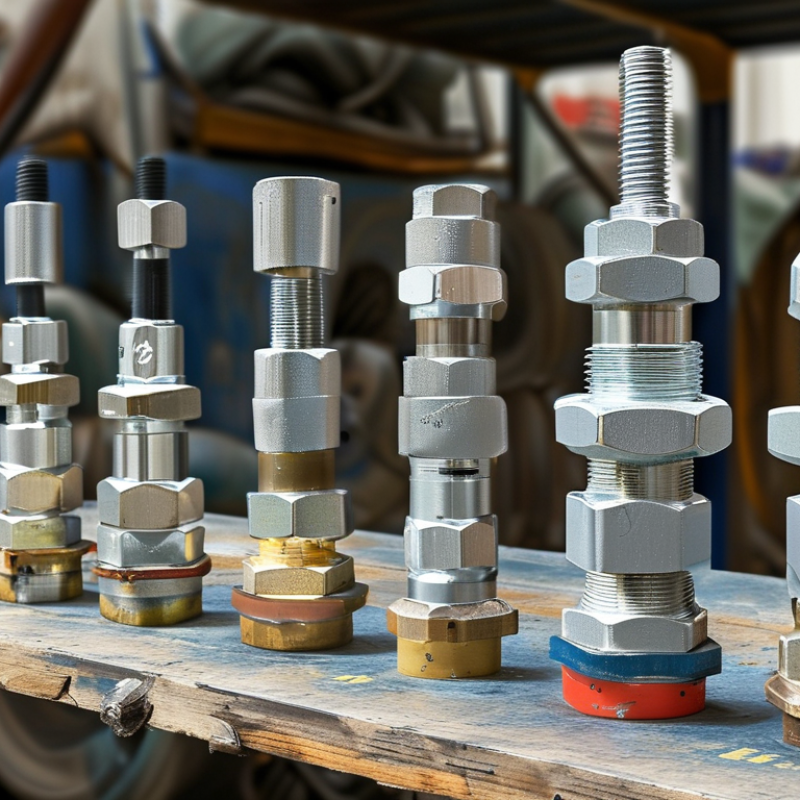
2026 Top Hydraulic Hose Fittings Types for Global Buyers?

Hydraulic Hose Fitting Fundamentals: ISO 12151 Types, Materials, and Sizes

2026 Top Hydraulic Hose Fittings Types for Global Buyers

Hydraulic Hose Fitting Fundamentals: ISO 12151 Types, Materials, and Sizes

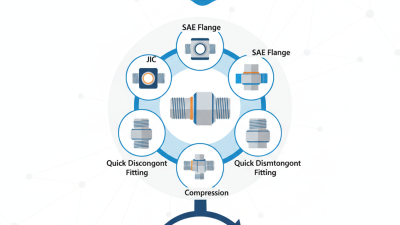
ISO 12151 provides a practical reference for selecting hydraulic hose fittings across international projects. Common configurations include flange connections, O-ring face seals, cone fittings, and metric stud ends. Each type supports different pressure levels, sealing methods, and installation conditions. Correct identification should include the hose inner diameter, thread standard, connection geometry, and working pressure. A fitting may look suitable but still leak after vibration or temperature changes. Fitment is unforgiving. Carbon steel suits many general applications, while stainless steel performs better in corrosive or humid environments. Surface treatment also affects rust resistance and service life.

Tips: Measure the hose bore with calibrated tools, not visual estimates. Confirm thread pitch and sealing method separately. Never mix metric and inch threads without verification. Check the full assembly pressure rating, including the hose, fitting, and adapter.

Global buyers should request dimensional drawings, material certificates, and pressure-test records. Sizes must match both the hose and the port, not only the fitting description. ISO 12151 guidance improves consistency, but it does not replace application review. Consider temperature, fluid compatibility, bending radius, impulse cycles, and installation space. A smaller fitting can restrict flow and increase pressure loss. An oversized fitting may create unnecessary weight and clearance problems. Standards reduce uncertainty, though they cannot correct poor measurements. Careful selection remains the most reliable safeguard.

2026 Top Hydraulic Hose Fittings Types for Global Buyers

Hydraulic Hose Fitting Fundamentals: ISO 12151 Types, Materials, and Sizes

The chart shows common hydraulic hose nominal bores and the theoretical flow rate at a reference velocity of 3 m/s. Flow values are calculated from Q = cross-sectional area × velocity and are not pressure ratings. ISO 12151 hose fittings are selected by hose size, connection interface, material, pressure, temperature, and fluid compatibility. Common material choices include zinc-plated carbon steel and stainless steel.

Threaded Fittings Compared: JIC 37°, ORFS, NPT, BSPP, and Metric Standards

For global hydraulic buyers, thread selection is a working decision, not a catalog preference. A 2024 hydraulic hose market assessment reports approximately 6% annual growth through 2030, driven by construction and mobile machinery. That growth increases the cost of small fitting mistakes.

Measure the thread.

JIC 37° fittings seal on a metal flare and suit many high-pressure applications. ORFS fittings use an O-ring face seal, reducing leakage risk under vibration. SAE J514 defines key dimensional requirements for both systems. NPT uses tapered threads, but the threads themselves are not the ideal sealing surface. Sealant and careful torque control remain essential. Standards matter.

BSPP uses parallel threads and usually seals with a bonded washer or O-ring. It is common in European and international equipment. Metric fittings, including ISO 6149 ports, depend on exact diameter and pitch identification. ISO 8434 also separates several fitting designs that look deceptively similar. A caliper helps. A visual guess does not.

In field inspections, I have seen JIC and metric threads forced together because their diameters appeared close. The result was damaged seating and hidden leakage.

Not always. Port depth, seal material, pressure pulses, temperature, and fluid compatibility must be checked together. ASME B1.20.1 remains a useful reference for NPT dimensions, but no standard replaces correct measurement and a controlled installation record.

Crimp and Reusable Fittings: SAE J517 Compatibility and Assembly Methods

2026 Top Hydraulic Hose Fittings Types for Global Buyers?

Crimp and reusable fittings remain practical choices for hydraulic hose assemblies. Their suitability depends on hose construction, pressure rating, temperature, and connection geometry. SAE J517 defines hydraulic hose requirements, but it does not make every fitting interchangeable. Fit is not guesswork.

In workshop assembly, crimp fittings provide a compact, consistent connection when matched with the correct hose and ferrule. The operator cuts the hose squarely, removes debris, marks insertion depth, and selects the specified die. A calibrated crimping machine then compresses the ferrule to the required diameter. Measure twice. An incorrect crimp may look acceptable while hiding weak retention.

Reusable fittings can support field repairs and lower-volume maintenance work. The hose is cut cleanly, and the fitting is installed using the specified socket, nipple, or threaded components. Lubrication and insertion depth matter. Avoid twisting the hose during assembly, because internal reinforcement can shift. SAE J517 compatibility should be checked against the exact hose type, fitting series, and working pressure, not only the thread size.

Experienced technicians also inspect the finished assembly for exposed wire, uneven ferrule compression, damaged threads, and excessive bend near the connection. Documentation improves reliability: record hose type, fitting size, crimp diameter, and inspection results. I have seen rushed assemblies pass a visual check, yet fail after repeated pressure cycles. That is a useful reminder. Standard references guide the work, but disciplined measurement makes the connection dependable.

Flange Fittings Explained: SAE J518 Code 61 and Code 62 Pressure Connections

2026 Top Hydraulic Hose Fittings Types for Global Buyers?

Flange fittings remain practical for high-pressure hydraulic lines, especially large-bore systems with vibration and limited assembly space. SAE J518 Code 61 is commonly selected for 3,000 psi-class applications. Code 62 supports higher pressure, often rated at 6,000 psi. Actual limits depend on size, temperature, hose construction, and the complete assembly. ISO 6162-1 and ISO 6162-2 provide related dimensional guidance. A 2024 industry report on the hydraulic hose market projects roughly 5% annual growth through 2029, driven by construction, agriculture, and industrial equipment demand. This growth makes correct flange selection more important, not merely convenient.

In field inspections, leakage often begins with poor alignment or damaged O-rings. Code 61 and Code 62 flanges may look similar, but their bolt patterns and pressure capabilities must not be mixed. Check the flange series, port size, sealing material, torque, and pressure rating together. Never judge safety from thread appearance alone. A technical market assessment published in 2024 also identifies maintenance replacement as a major demand factor. That matters because worn hoses can hide fitting problems. My own practical concern is simple: installation guides are sometimes followed too quickly, and that creates preventable errors.

Tips: Confirm SAE J518 dimensions before ordering. Use calibrated torque tools. Inspect the O-ring groove carefully. Keep a pressure record for every assembly. Small details matter.

2026 Top Hydraulic Hose Fittings Types for Global Buyers? - Flange Fittings Explained: SAE J518 Code 61 and Code 62 Pressure Connections

Fitting or Connection Type Main Standard Sealing Method Typical Pressure Classification Common Size Range Typical Applications Key Buying Considerations
SAE Code 61 Split-Flange SAE J518; ISO 6162-1 O-ring face seal compressed between the flange head and port 3000 psi nominal series; actual allowable pressure depends on size, material, temperature, and assembly SAE flange sizes approximately 1/2 to 5 in Mobile equipment, construction machinery, hydraulic pumps, valves, and return or pressure lines Confirm flange size, port pattern, O-ring material, bolt grade, and hose working pressure
SAE Code 62 Split-Flange SAE J518; ISO 6162-2 O-ring face seal compressed between the flange head and port 6000 psi nominal series; actual allowable pressure depends on size, material, temperature, and assembly SAE flange sizes approximately 1/2 to 3 in High-pressure hydraulic circuits, heavy-duty machinery, hydrostatic drives, and demanding industrial systems Do not substitute Code 61 parts for Code 62; verify flange head, clamp halves, bolts, and port geometry
ORFS Hose Fitting SAE J1453 Captive O-ring on the male face seals against a flat female face High-pressure service; rating is size- and assembly-dependent Commonly available in inch tube and hose connection sizes Leak-sensitive mobile hydraulics, industrial power units, and systems exposed to vibration Inspect the O-ring groove and flat sealing face; avoid scratches, contamination, and over-tightening
37° Flared JIC Fitting SAE J514 Metal-to-metal seal on a 37° flare Medium- to high-pressure service; maximum pressure varies by size and configuration Typically inch tube and hose sizes from small instrumentation lines to large hydraulic lines General hydraulic equipment, test lines, manifolds, and applications requiring easy assembly Confirm 37° flare compatibility; JIC and 45° automotive flare connections are not interchangeable
BSPP Parallel Thread Fitting ISO 1179-1; commonly identified as G thread Bonded seal, O-ring, or sealing washer at the port face Pressure depends on fitting design, size, material, and sealing arrangement Commonly G 1/8 to G 2 and other standardized sizes Global industrial equipment, European and Commonwealth markets, valves, and adapters BSPP is parallel; it should not be confused with tapered BSPT or NPT threads
BSPT Tapered Thread Fitting ISO 7-1 Thread interference with an approved thread sealant Depends on size, material, thread quality, and installation method Commonly small and medium pipe sizes Legacy and regional hydraulic systems, pipe adapters, and compact equipment Use the correct sealant and installation torque; avoid excessive tightening that can damage ports
Metric Bite-Type Tube Fitting ISO 8434-1; DIN 2353 Cutting ring or progressive ring grips and seals the tube Available in light and heavy series; rating varies by tube outside diameter, wall thickness, and material Metric tube outside diameters commonly from 4 to 42 mm European machinery, hydraulic manifolds, rigid tube installations, and industrial systems Match tube OD and wall thickness exactly; follow the specified pre-assembly and tightening procedure
Metric O-Ring Face-Seal Fitting ISO 9974 and related metric port specifications O-ring seals against a machined port face or shoulder Pressure rating is dependent on fitting size, port design, material, and hose assembly Metric thread and tube sizes used in international equipment Leak-control applications, compact hydraulic units, and equipment using metric ports Check thread pitch, O-ring dimensions, port depth, and tightening method before ordering
NPT Tapered Thread Fitting ASME B1.20.1 Tapered thread interference with a compatible sealant Depends on nominal pipe size, material, schedule, and fitting configuration Commonly 1/8 to 2 in in hydraulic adapter applications North American equipment, pressure gauges, valves, and hydraulic adapters NPT and BSPT have different thread angles and pitches; they should not be treated as interchangeable
SAE 45° Flare Fitting SAE J512 Metal-to-metal seal on a 45° flare Generally used for lower-pressure fluid lines than dedicated high-pressure hydraulic connections Small inch tube sizes Low- to medium-pressure fluid lines, instrumentation, and general service connections Do not use as a replacement for 37° JIC fittings; verify flare angle and service pressure
Technical selection note: The pressure figures shown for SAE J518 Code 61 and Code 62 identify the standard pressure series, not a universal rating for every size or complete hose assembly. Final selection should be based on the lowest-rated component, including the hose, fitting, flange head, clamps, bolts, port, temperature, fluid, and installation method.

Global Selection Guide: Pressure Ratings, ISO 18752 Classes, and Application Safety

2026 Top Hydraulic Hose Fittings Types for Global Buyers?

Global buyers should match fitting design with hose construction, pressure, temperature, and installation space. Common choices include crimped fittings, reusable fittings, flange connections, ORFS fittings, and JIC-style connections. Crimped fittings suit production systems with controlled assembly equipment. Reusable fittings can help during field repairs, but they need careful inspection and correct thread identification. A fitting may look identical while using a different sealing method.

ISO 18752 classes describe hose performance categories, not a universal pressure rating for every fitting. Buyers should check the hose class, working pressure, impulse resistance, bend radius, and temperature range. The complete assembly must be rated for the lowest-pressure component. Pressure spikes matter. A gauge showing 25 MPa may hide repeated impulses above that level. I have seen clean installations fail because the hose was selected only by average pressure.

Application safety also depends on fluid compatibility, abrasion protection, routing, and fitting torque. Keep hoses away from sharp edges and hot surfaces. Avoid twisting during installation. Use a protective sleeve where people may stand nearby. Thread standards require special attention in global purchasing. NPT, BSP, metric, and UNF connections are not interchangeable. My own selection checks are useful, but not perfect; local testing can reveal vibration or temperature problems that a catalog cannot predict. A traceable inspection record should include batch details, pressure tests, and assembly date.

Choose a global leader for your hydraulics solutions

How can we help you?

Call to 0034 943884600 Contact us
Call us Contact us

We use cookies to ensure that we give you the best experience on our website. If you continue without changing your settings, we'll assume that you agree to receive cookies on the HINE website. For more information read our cookie policy page, click the link for more information.plugin cookies

ACEPTAR
Aviso de cookies