What Is the Best Recycling Baler Machine from China?
Choosing the best Recycling Baler Machine from China requires more than comparing prices and motor power. A reliable decision begins with your actual materials, daily volume, available floor space, and operating conditions. Cardboard, plastic bottles, textile waste, and aluminum cans each behave differently inside a baling chamber. A machine designed for dry cardboard may perform poorly with wet or mixed materials. That detail is often overlooked.
Chinese manufacturers offer a wide range of vertical and horizontal balers. Their options may include adjustable bale density, automatic strapping, hydraulic control, safety interlocks, and customized chamber sizes. However, attractive specifications do not automatically prove dependable performance. Factory experience, component quality, technical documentation, and after-sales support deserve equal attention. Ask for production videos, test-bale results, maintenance records, and clear information about replacement parts. Real evidence matters.
A practical evaluation should also consider feeding methods and labor requirements. For example, a small warehouse may benefit from a compact vertical baler with simple controls. A recycling center handling several tons daily may need a continuous horizontal system with stronger automation. Watch the details. Check weld quality, hydraulic leaks, electrical protection, noise levels, and emergency-stop access. These small points affect safety and long-term costs.
No single machine suits every business. Even experienced buyers can misjudge capacity during seasonal peaks. A cautious comparison should include total ownership cost, not only the purchase quotation. This guide examines key machine types, supplier qualifications, performance indicators, and common purchasing mistakes. Its goal is practical: helping buyers identify a Recycling Baler Machine that fits real operations, not just a polished product brochure.
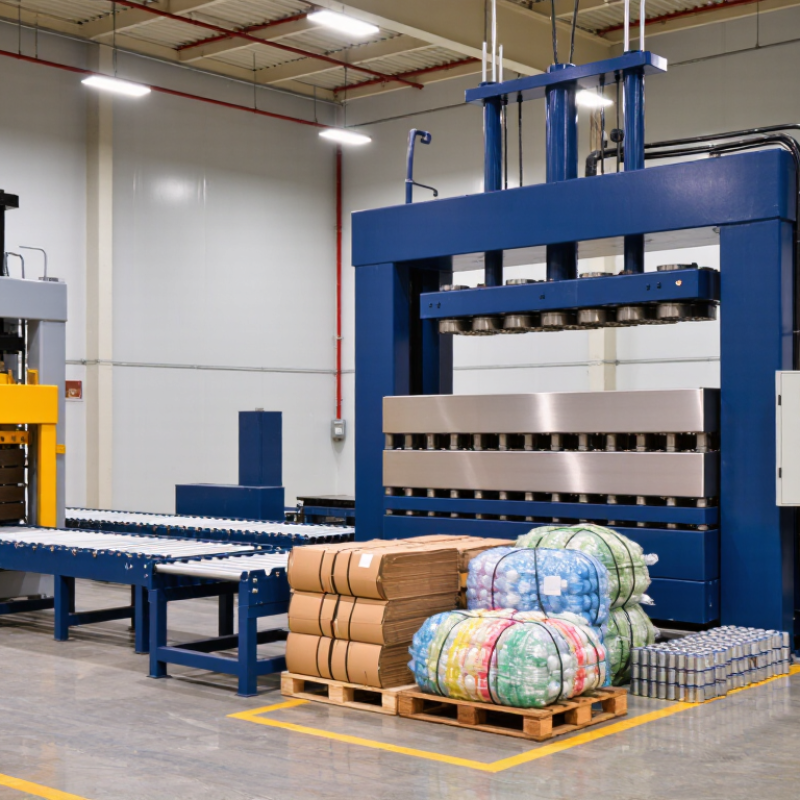
Types of Recycling Baler Machines Made in China
What Is the Best Recycling Baler Machine from China?
Types of Recycling Baler Machines Made in China
Vertical balers suit small recycling stations, shops, and warehouses with limited floor space. They compress cardboard, paper, plastic film, and soft packaging into manageable bales. Operators usually load material through a front chamber and remove the bale manually. These machines are simple. They also need more labor.
Horizontal balers handle larger daily volumes. They use a longer chamber and can connect with conveyors or sorting lines. Automatic models feed, compress, tie, and discharge materials with limited handling. Two-ram balers provide stronger control for mixed paper, rigid plastic, and bulky recyclables. Some Chinese manufacturers also produce semi-automatic models for facilities that need flexibility without a fully automated line. Capacity, bale density, wire systems, and motor power vary widely.
The best type depends on material, moisture, bale size, and available labor. A cardboard user may not need a heavy two-ram machine. That assumption can waste money and floor space. Ask for recorded test results using your own material, not only catalog figures. Check chamber dimensions, cycle time, safety interlocks, electrical standards, spare-part access, and technical support. Inspect welds, hydraulic hoses, and control cabinets before purchase. In practice, a lower-cost machine can perform well when maintained correctly. However, service response and operator training are sometimes underestimated. That deserves careful review.
Key Features That Define a High-Quality Recycling Baler
A high-quality recycling baler from China should be judged by performance, not appearance. The World Bank’s What a Waste 2.0 report estimates global municipal waste could rise from 2.01 billion tonnes in 2016 to 3.40 billion tonnes by 2050. Reliable compaction equipment will therefore face heavier workloads. Look for a rigid steel chamber, stable hydraulic pressure, and wear-resistant bale channels. Bale density should remain consistent across cardboard, plastics, or textile offcuts. Uneven bales create transport problems.
Control accuracy matters too. A programmable cycle, pressure monitoring, and automatic wire or strap cutting can reduce operator errors. Ask for tested output data, including bale weight, cycle time, motor power, and energy use. ISO 12100-based risk assessment is useful when reviewing guarding and emergency-stop design. Electrical components should also match the destination country’s voltage and safety requirements. Small details matter.
Tips: Request a live material trial before purchase. Measure five consecutive bales. Check weight variation, noise, oil leakage, and recovery time. Ask how spare seals, sensors, and hydraulic hoses are sourced. A machine may look efficient during a short demonstration, yet struggle after continuous operation. I would not trust a glossy specification sheet alone. Maintenance access is often overlooked, and that mistake becomes expensive. The best choice balances density, uptime, safety, and realistic service support.
How to Match a Baler Type to Your Recycling Materials
What Is the Best Recycling Baler Machine from China?
How to Match a Baler Type to Your Recycling Materials
The best recycling baler is not the largest one. It is the machine that fits your material, moisture level, and daily volume. The World Bank’s What a Waste 2.0 report estimates that global municipal waste reached 2.01 billion tonnes annually. That scale makes material separation and efficient compaction increasingly important.
For cardboard and office paper, a vertical baler often suits smaller warehouses. It needs less floor space and can produce dense, manageable bales. A horizontal baler is more suitable for distribution centers handling continuous cardboard flow. Paper bales should stay dry. Wet fiber reduces bale strength and may increase handling problems. For plastic film, choose a baler with controlled compression and reliable tying. Loose film can expand quickly after ejection. Metal cans and light scrap usually require stronger hydraulic systems and reinforced chambers. The correct pressure depends on the material, not only its weight.
Think beyond the catalogue.
Tips: Record one week of material volume, contamination, and moisture. Then compare the results with the chamber size and hourly capacity. The U.S. Environmental Protection Agency reported a paper and paperboard recycling rate of about 68% in 2018, showing the value of effective fiber recovery. However, national data can hide local differences. A machine tested on clean cardboard may perform poorly with laminated cartons or mixed waste. Request a sample-bale test, inspect wire or strap access, and confirm service support before purchase. I have seen many buyers overestimate capacity. Bigger is not always better.
Evaluating Chinese Manufacturers, Safety, and Machine Reliability
What Is the Best Recycling Baler Machine from China?
The best Chinese recycling baler is not always the cheapest or fastest model. The Global E-waste Monitor 2024 reported 62 million tonnes of electronic waste in 2022. Only 22.3% entered documented collection and recycling systems. This rising volume increases demand for compact, dependable baling equipment. However, advertised capacity can be misleading. Ask for throughput tests using your actual cardboard, plastics, or paper mix. Moisture changes performance.
Safety should guide every manufacturer comparison. Check emergency stops, guarded moving parts, pressure relief valves, door interlocks, and safe bale discharge. ISO 12100 supports risk assessment throughout machine design. OSHA guidance also stresses machine guarding and lockout procedures. Request wiring diagrams, hydraulic schematics, risk assessments, and factory acceptance test records. Small details matter. A reachable emergency button matters.
Reliability requires evidence, not polished factory videos. Review weld quality, cylinder leakage tests, motor protection, cycle-time records, and spare-parts availability. Ask how the machine performs after repeated cycles, not only during demonstrations. A strong supplier should provide installation training and clear maintenance intervals. I have learned that a clean workshop proves little without traceable test data. Even experienced buyers can overlook operator fatigue and awkward loading angles. That weakness deserves honest discussion. Reference: Global E-waste Monitor 2024; ISO 12100; OSHA machine-guarding guidance.
This benchmark compares common recycling baler configurations using practical evaluation dimensions: throughput, bale density, operator safety, energy efficiency, and maintenance simplicity. Scores are normalized on a 0–100 scale from typical technical specifications and operating characteristics; they are intended for equipment screening rather than brand comparison.
Comparing Costs, Support, and Long-Term Operating Value
What Is the Best Recycling Baler Machine from China?
Comparing Costs, Support, and Long-Term Operating Value
The lowest purchase price is rarely the full cost of a recycling baler. Buyers should measure electrical consumption, wire usage, maintenance hours, and expected downtime. A machine with a stronger chamber and reliable hydraulic seals may cost more initially. It can produce denser bales and reduce transport expenses over several years.
Ask for a detailed quotation. It should include installation guidance, spare parts, operator training, and warranty coverage. Remote technical support is useful, but it cannot replace practical troubleshooting. A clear video call may solve a sensor issue quickly. Sometimes, it will not. Local service availability should influence the final decision, especially for facilities running two or three shifts.
Long-term value also depends on material flow. Cardboard, plastic film, and mixed paper can require different feeding systems and compression settings. Check the rated bale weight against your real daily volume, not an ideal factory sample. Request test data using similar material, including moisture and contamination levels. The calculation is not always neat. Operators should record cycle times, rejected bales, oil leaks, and power use during the first six months. Those records often reveal costs that sales discussions overlook. A well-supported machine from China can be competitive when documentation, parts access, safety features, and realistic capacity are evaluated together.