

Choosing the best China Machining Parts manufacturer requires more than comparing prices. Global buyers need evidence, process control, and consistent communication. A reliable supplier should explain its materials, tolerances, surface finishes, inspection methods, and production capacity clearly.
Dr. Mikell P. Groover, a respected manufacturing author, defines manufacturing as “the transformation of materials into items of greater value through various processing and assembly operations.” This principle applies directly to Machining Parts. A strong manufacturer does not simply remove metal from a block. It converts engineering drawings into accurate, repeatable components. CNC milling, turning, grinding, and five-axis machining may all be important. However, advanced equipment alone does not guarantee dependable results.
Look for practical proof. Ask for material certificates, first-article inspection reports, CMM records, and sample parts. Check whether the factory controls tool wear and records dimensional data. Review its experience with aluminum, stainless steel, brass, engineering plastics, or difficult alloys. ISO 9001 certification can support credibility, but certification is not a complete answer. Audits, communication, and delivered quality still matter.
The lowest quote can hide risks. Delayed feedback can disrupt production schedules. Even a small burr may affect assembly. Even an attractive prototype may fail during volume production. Therefore, this guide examines China-based manufacturers through capability, quality assurance, transparency, lead time, and total cost. The word “best” remains subjective. A supplier that fits one buyer may disappoint another. Careful verification is still necessary.
China has become a leading source of machining parts through scale, supplier density, and practical manufacturing experience. The United Nations Industrial Development Organization reported that China produced about 31.6% of global manufacturing value added in 2022. This industrial depth supports fast sourcing of steel, aluminum, tooling, heat treatment, and surface finishing.
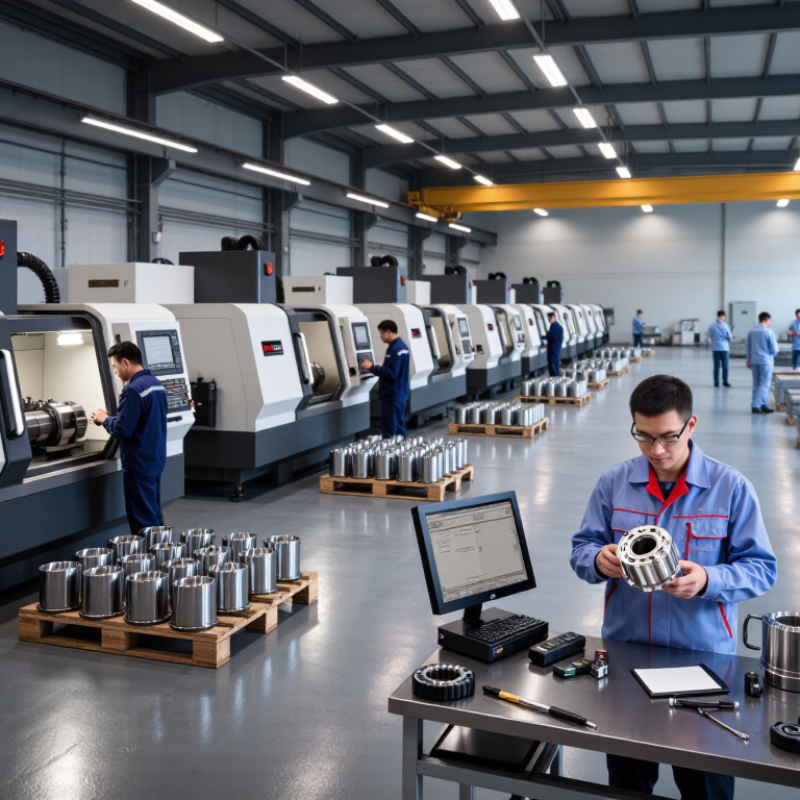
The advantage is visible on the workshop floor. A buyer can often coordinate CNC turning, five-axis milling, grinding, and inspection within one regional supply network. China’s National Bureau of Statistics recorded 6.1% growth in manufacturing value added during 2024. That growth reflects continuing investment in automation and production capacity. It also helps suppliers handle prototypes, repeat orders, and complex tolerances with fewer transport stages.
Not every factory is equally capable.
Reliable buyers still need evidence. Request material certificates, dimensional reports, process records, and sample approval before volume production. ISO’s 2023 survey recorded more than 1.4 million ISO 9001 certificates worldwide, but certification alone cannot prove stable machining performance. I have seen attractive quotations fail when inspection planning was vague. Low pricing can hide weak fixturing, inconsistent operators, or unfinished deburring. Clear drawings, measurable acceptance criteria, and video audits reduce that risk. China offers strong manufacturing infrastructure, yet supplier selection remains the buyer’s responsibility.
Chinese machining manufacturers support global buyers with a broad range of production processes. CNC milling creates accurate slots, pockets, and complex surfaces. CNC turning suits shafts, bushings, and round components.
For tighter finishes, grinding can improve surface quality and dimensional control. Electrical discharge machining handles hardened materials and narrow internal features. Some factories also provide sheet metal cutting, bending, and secondary assembly.
Tips: Request process details, not only a low quotation. Share drawings with tolerances, material grades, surface requirements, and annual quantities. Ask for sample inspection reports, equipment lists, and traceable material certificates. A coordinate measuring machine report can confirm critical dimensions, but it cannot replace functional testing. Keep communication precise. Small wording differences may change the finished part.
Reliable sourcing depends on process capability and quality discipline. Experienced manufacturers usually review designs before production and identify difficult corners, thin walls, or excessive tolerances.
Ask how operators control first articles and in-process checks. No supplier is perfect. A part may pass inspection yet fit poorly during assembly. This is why prototype testing matters.
Cost matters, but repeatability matters more when hundreds of parts must match. Be willing to revise the design after real testing; the first drawing is not always the best drawing.
China’s large manufacturing base creates choice, but scale alone does not prove capability. UNIDO’s International Yearbook of Industrial Statistics 2024 estimates that China produced about 31% of global manufacturing value added in 2023. That breadth can support competitive machining costs and specialized capacity. It can also make comparison difficult. Buyers should check whether the supplier’s equipment, tolerances, and materials match the actual drawing.
Request recent inspection records, not only certificates. Review coordinate-measuring-machine reports, calibration dates, material certificates, and nonconformance records. Ask for a sample part with critical dimensions clearly marked. A strong manufacturer explains its measurement method and acceptance criteria. ISO 9001 registration helps, but it does not guarantee perfect parts. That distinction matters. A polished audit folder can still hide weak process control.
Evaluate production evidence through a small trial order. Check first-article approval, revision control, packaging, and response speed when dimensions fail. The World Bank’s 2023 Logistics Performance Index gave China a score of 3.7 out of 5 and ranked it 19th globally, showing strong but not flawless logistics performance. Confirm export documentation, lead-time buffers, and contingency plans before scaling. Price should be compared with scrap risk, inspection effort, and delivery reliability. My own assessment would remain cautious: one successful sample is useful evidence, not a complete qualification.
A practical buyer evaluation should prioritize quality assurance, technical capability, material traceability, production capacity, delivery performance, communication, and total cost.
The chart presents a 100-point evaluation framework. Quality and technical capability receive the highest weighting because they directly affect part conformity, reliability, and production risk. Buyers should validate each category with drawings, inspection reports, sample orders, certifications, and documented delivery records.
China Best Machining Parts Manufacturer for Global Buyers?
Quality evidence matters more than a low quotation. The ISO Survey 2022 recorded 1,265,216 ISO 9001 certificates worldwide. This figure shows how widely quality management has become a buyer expectation. A capable machining supplier should provide a current ISO 9001 certificate, defined inspection procedures, calibrated equipment, and traceable material records. Ask for the certificate scope. It should cover machining activities, not only office administration.
For automotive work, IATF 16949 may be necessary. Medical components can require ISO 13485 and stricter process validation. ISO 14001 is also increasingly relevant; the same ISO survey recorded 529,853 certificates globally in 2022. Certifications do not guarantee perfect parts. They prove a controlled system exists. That distinction matters.
Request a first-article inspection report with dimensions, tolerances, surface roughness, and material grade. A coordinate measuring machine report should identify the equipment and calibration status. Production samples should match the approved drawing revision. Small details expose weak control.
Real factory experience also teaches caution. Some suppliers send excellent samples, then change tools or inspection frequency during volume production. A written control plan helps prevent this. Still, no document replaces an honest factory audit. Even experienced buyers occasionally overlook packaging damage or corrosion protection. That deserves reflection. Reliability is built through repeated evidence, not attractive certificates.
China Best Machining Parts Manufacturer for Global Buyers?
Ordering machined parts from China starts with a complete technical package. Send 2D drawings, 3D files, material grades, tolerances, surface finishes, and annual volumes. Missing details create expensive assumptions. A reliable supplier should confirm critical dimensions before production. Ask for a first-article inspection report, not only attractive samples. Pricing should separate material, machining time, tooling, finishing, inspection, packaging, and transport. Compare quotations line by line. The lowest quote may hide weak inspection or unclear tolerance control.
Shipping needs equal attention. The World Bank’s 2023 Logistics Performance Index gives China a 3.7 score and ranks it 19th among 139 economies. UNCTAD reports that maritime transport carries over 80% of global merchandise trade by volume. Request both air and sea options, with Incoterms, carton sizes, gross weight, insurance, and customs documents clearly stated. A production schedule is not a shipping schedule. Weather, port congestion, and rework can still move delivery dates. I learned that optimistic promises often sound professional, but written milestones are safer.
Tips: Use one shared revision number. Approve samples before batch production. Ask suppliers to photograph packed cartons and labels. Keep payment terms linked to measurable stages. Also, challenge your own drawing; some tolerances may be tighter than the function requires. That small review can reduce machining cost without reducing performance.
| Procurement Dimension | Recommended Buyer Input or Requirement | Typical Planning Data | What Affects the Result | Supplier Communication Checkpoint |
|---|---|---|---|---|
| RFQ Package | Provide 2D drawings, 3D CAD files, material grade, quantity, surface finish, tolerance, inspection requirements, and delivery destination. | 1 complete drawing set per part; use revision numbers and clearly marked critical dimensions. | Incomplete drawings, unclear datums, missing tolerances, and unapproved material substitutions can cause quotation differences. | Ask the supplier to confirm drawing revision, manufacturability concerns, assumptions, and excluded requirements in writing. |
| Prototype Order | Use a small quantity to verify design, material, finish, dimensional performance, and inspection documentation before production. | Common prototype planning window: approximately 1–3 weeks after drawing and material approval. | Part complexity, material availability, special tooling, heat treatment, coating, and inspection scope. | Request a first-article inspection report and a sample approval process before releasing a larger batch. |
| Production Lead Time | Confirm the required batch quantity, delivery schedule, packaging standard, and order release date. | Typical CNC production planning range: approximately 2–6 weeks after technical approval; larger or specialized orders may take longer. | Order volume, machine capacity, production queue, material procurement, secondary processes, and rework risk. | Request a milestone schedule covering material purchase, machining, finishing, inspection, packing, and dispatch. |
| Pricing Structure | Compare quotes using the same specification, quantity, Incoterm, packaging method, inspection level, and payment terms. | Unit price generally decreases as quantity increases because setup, programming, tooling, and inspection costs are distributed across more parts. | Material cost, machining time, setup count, tolerances, surface treatment, scrap allowance, packaging, freight, and payment fees. | Ask for a cost breakdown or written clarification of what is included and excluded from the quoted price. |
| Material Verification | Specify the exact material standard or grade and identify whether a material certificate is required. | Material certificates are normally requested when traceability, strength, corrosion resistance, or regulated use is important. | Material grade, country-specific standards, batch traceability, heat treatment, and certificate format. | Confirm certificate availability before production and ensure the certificate identifies the supplied material batch. |
| Tolerance and Inspection | Define general tolerances, critical dimensions, measurement methods, sampling rules, and acceptable quality limits. | Tighter tolerances usually require additional process control, measurement time, and sometimes temperature-controlled inspection. | Part geometry, tolerance band, measuring equipment, surface condition, datum strategy, and inspection frequency. | Agree on the inspection report format, measurement points, calibration requirements, and handling of nonconforming parts. |
| Surface Finishing | Specify the finishing process, color or appearance requirement, protected areas, thickness requirement, and allowable cosmetic marks. | Finishing is commonly completed after machining and may add several working days to the schedule. | Process availability, masking requirements, coating thickness, color matching, corrosion resistance, and subcontractor capacity. | Approve a finish sample or reference standard and define acceptable surface defects before batch production. |
| Shipping Method | Choose the transport method according to urgency, shipment size, destination, and total landed cost. | Typical planning ranges: air express about 3–7 business days; air freight about 5–12 business days; ocean freight often 25–45 days, depending on route and customs. | Destination, carrier schedule, customs clearance, public holidays, port congestion, shipment volume, and Incoterm. | Confirm the shipping method, estimated transit time, export documents, tracking procedure, and responsibility for customs clearance. |
| Packaging and Protection | Define individual wrapping, separators, corrosion protection, carton or crate strength, labeling, and pallet requirements. | Packaging requirements should be approved before production; heavier or precision parts may require reinforced packaging. | Part weight, sharp edges, cosmetic surfaces, moisture sensitivity, stacking load, and destination handling conditions. | Request packaging photographs before dispatch and confirm quantity per carton, gross weight, net weight, and carton dimensions. |
| Payment and Order Control | Use a purchase order or sales contract listing drawings, revision, quantity, price, delivery terms, quality requirements, and remedies. | Payment schedules vary by order value and supplier agreement; milestone payments may be used for tooling or larger production orders. | Buyer and supplier risk allocation, tooling investment, order size, credit terms, and payment method fees. | Keep all changes in a written change-order process and obtain approval before the supplier modifies production requirements. |
| Supplier Communication | Assign one technical contact and one commercial contact, with a fixed reporting frequency during production. | Weekly progress updates are generally practical for active production orders; urgent issues should be reported immediately. | Time-zone differences, language clarity, engineering complexity, response speed, and internal approval procedures. | Use concise written confirmations, numbered action items, dated revisions, photographs, and agreed response deadlines. |
| Final Acceptance | Review quantity, dimensions, finish, certificates, inspection records, packaging, and shipping documents before or shortly after dispatch. | Acceptance criteria should be defined before production; unresolved nonconformities should be documented with photographs and measurements. | Inspection timing, sampling plan, defect classification, agreed tolerances, and contract terms. | Record any corrective action, replacement requirement, credit arrangement, or process improvement in a formal written report. |
How can we help you?
Call to 0034 943884600 Contact usWe use cookies to ensure that we give you the best experience on our website. If you continue without changing your settings, we'll assume that you agree to receive cookies on the HINE website. For more information read our cookie policy page, click the link for more information.plugin cookies
ACEPTAR