

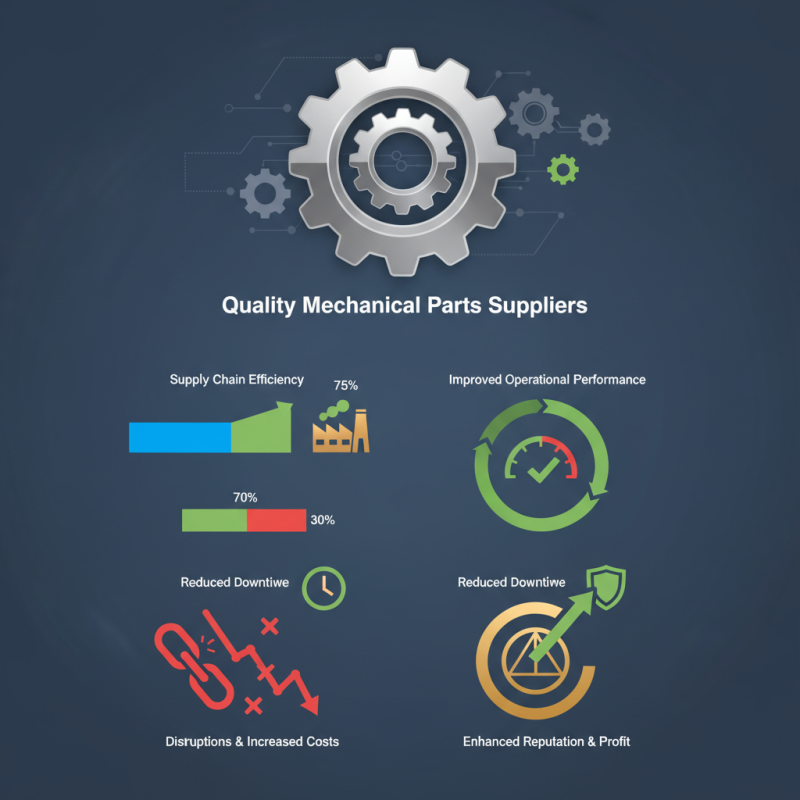
In today's competitive landscape, choosing the right mechanical parts suppliers is crucial for business success. According to recent reports from the National Association of Manufacturers, nearly 75% of manufacturing firms cite supply chain efficiency as a top priority. This statistic highlights the growing importance of reliable suppliers who can provide high-quality parts consistently.
Companies that partner with quality mechanical parts suppliers often see improved operational performance. The Global Information Network estimates that businesses can reduce downtime by 30% when they source from trusted suppliers. These suppliers help maintain production schedules and meet customer demands effectively. However, even with this knowledge, many companies still overlook the importance of vetting their suppliers meticulously.
The challenges in this sector cannot be ignored. For instance, a significant percentage of businesses experience disruptions due to subpar parts. Poor supplier choices can lead to delays and increased costs. It’s essential to reflect on these challenges. In an industry where precision is paramount, the choice of mechanical parts suppliers can significantly influence a company's reputation and bottom line.
Choosing quality mechanical parts suppliers is crucial for any business. Quality parts ensure reliable performance, reducing the risk of unexpected failures. A single defective component can lead to costly downtime. When equipment malfunctions, productivity suffers. Employees become frustrated, and timelines extend. Every mistake costs money and energy.
Understanding the importance of quality means recognizing its long-term benefits. High-quality parts often result in lower maintenance costs. They provide better durability and performance under stress. However, some businesses still opt for cheaper alternatives. This can be tempting and might save money in the short term. It’s essential to weigh these decisions carefully. Are quick savings worth potential future losses?
Moreover, quality parts enhance safety. If machinery fails, accidents can happen. Poor-quality components increase the risk of injury or damage. Businesses could face legal repercussions and damaged reputations. Choosing the right supplier requires due diligence, but it pays off in the end. The investment in quality should reflect in every aspect of production.
When selecting reliable mechanical parts suppliers, it's essential to consider several key criteria. Quality assurance is paramount. According to a report from the Manufacturing Industry Association, businesses that prioritize quality reduce failure rates by up to 30%. Look for suppliers with ISO certifications. This ensures they meet industry standards.
Another crucial factor is lead time. Reliable suppliers can deliver parts on time, minimizing downtime in your production line. A study by the Supply Chain Research Center found that companies with shorter lead times improve their competitiveness by 25%. Ask potential suppliers about their shipping timelines and previous performance metrics.
**Tip:** Checking reviews and testimonials can provide insights into a supplier's reliability. Don't hesitate to inquire about their experience with similar projects.
Additionally, consider their communication skills. A supplier that promptly addresses your concerns is valuable. Effective communication can prevent misunderstandings that lead to costly mistakes. Remember, sometimes a low price can mask potential issues.
**Tip:** Establish clear expectations from the beginning. This will help you gauge a supplier's commitment to meeting them. Consistent follow-ups will also ensure they stay accountable.
When it comes to mechanical parts, quality matters. The right supplier not only provides durable components but also impacts overall business performance. High-quality parts lead to fewer breakdowns. This can save money on repairs and enhance operational efficiency. Imagine machinery running smoothly. Less downtime means increased productivity. Customers notice the difference.
A company’s reputation hinges on the reliability of its products. If clients frequently encounter issues, trust erodes. Quality parts reflect a commitment to excellence. A business that prioritizes superior components gains loyalty. However, some may undervalue this aspect, focusing solely on price. This could lead to long-term consequences, both financially and reputationally. Reflecting on past mistakes can guide future decisions.
Quality parts also influence customer satisfaction. Happy clients tend to return and refer others. It's a cycle of growth. Yet, not every decision will be perfect. There might be times when a cheaper part seems appealing. That short-term gain can quickly turn into a long-term headache. Investing in quality should always remain a priority.
Evaluating a supplier’s reliability and quality assurance practices is crucial for businesses using mechanical parts. A recent industry report indicates that 70% of manufacturing disruptions stem from supplier issues. This statistic highlights the importance of careful supplier selection. When reviewing potential partners, documentation is essential. Certifications like ISO 9001 signal a commitment to quality management. However, not all suppliers possess valid certifications. Verifying these can be a daunting task.
Communication is a key aspect of supplier evaluation. Engaging in open dialogues can reveal much. Ask about their quality control processes. An ideal supplier should conduct regular audits. Research shows that suppliers with robust quality assurance systems reduce defects by up to 50%. This statistic may seem optimistic, but numerous examples exist. However, don’t overlook smaller suppliers. Many niche operators offer quality parts at competitive rates. Yet, the risk of inconsistent quality can be high.
Lastly, gather feedback from existing clients. This can provide insights into a supplier’s reliability. Trust your instincts; if you sense hesitancy, reconsider your choice. Be mindful that reliability doesn’t solely depend on the supplier; your business processes must also ensure compatibility. This two-way street requires ongoing effort to foster strong partnerships.
| Supplier Criteria | Rating (1-5) | Quality Assurance Practices | Delivery Efficiency | Customer Support |
|---|---|---|---|---|
| Material Certification | 4 | ISO 9001 Compliance | 95% on-time delivery | 24/7 Customer Support |
| Product Testing | 5 | Regular Quality Inspections | 98% accuracy | Live Chat Support |
| Reputation | 4 | Third-Party Audits | Same-day shipping available | Feedback System |
| Warranty Terms | 5 | Lifetime Warranty on Parts | 100% fulfillment rate | Dedicated Account Manager |
Partnering with quality mechanical parts suppliers offers significant long-term benefits for businesses. Research indicates that companies sourcing high-quality parts experience a 15% decrease in failure rates. This reduction not only saves on replacement costs but also enhances overall product reliability. Failure in mechanical systems often leads to costly downtimes. A 2021 industry report found that unplanned downtime can cost manufacturers up to $260,000 per hour.
In contrast, reliable suppliers prioritize quality control, ensuring that parts meet industry standards. They implement rigorous testing and inspection processes, which minimizes defects. This commitment to quality can lead to better customer satisfaction. Businesses relying on superior components often see a 20% increase in repeat orders. However, not all suppliers maintain consistency. Some might cut corners, offering lower prices at the expense of quality. This practice invites risk. Businesses must carefully evaluate their suppliers to avoid this trap.
Investing in high-grade mechanical parts pays off. Over time, it cultivates stronger relationships with suppliers who value longevity and performance. A 2020 study found that businesses with stable supplier partnerships report a 30% increase in operational efficiency. Quality parts not only enhance output but can also elevate a brand’s reputation. Nevertheless, companies sometimes hesitate to make these investments, fearing upfront costs. Balancing immediate budgets with long-term gains is crucial for sustainable growth.
How can we help you?
Call to 0034 943884600 Contact usWe use cookies to ensure that we give you the best experience on our website. If you continue without changing your settings, we'll assume that you agree to receive cookies on the HINE website. For more information read our cookie policy page, click the link for more information.plugin cookies
ACEPTAR