

How to Choose the Right Cooling Equipment for Your Business?

Choosing the right Cooling Equipment is a business decision, not a simple purchase.

The International Energy Agency’s The Future of Cooling report estimates that space-cooling electricity demand could triple by 2050. It also identifies cooling as one of the fastest-growing electricity uses in buildings. The UNEP and IEA Cooling Emissions and Policy Synthesis Report warns that cooling-related emissions could more than double by 2030 without stronger efficiency measures. These figures matter in a real workplace. A poorly selected unit can raise monthly bills, create uneven temperatures, and shorten product life.

“Growing demand for air conditioners is one of the most critical blind spots in today’s energy debate,” said Fatih Birol, Executive Director of the IEA. His warning applies beyond air conditioning. Refrigeration, process chillers, cold rooms, and heat-pump systems also deserve careful evaluation. Capacity should match the building’s heat load, operating hours, insulation, and local climate. Oversizing may cause frequent cycling. Undersizing may leave staff or products exposed to unstable temperatures.

Look beyond the price tag.

Compare seasonal efficiency, refrigerant type, maintenance access, noise levels, controls, warranty coverage, and expected service costs. A restaurant kitchen may need washable filters and rapid recovery after door openings. A warehouse may require precise monitoring and backup capacity. These details are easy to overlook. I have seen efficiency claims lose value when filters remain blocked or sensors drift.

There is no universal best system. The right choice depends on measurable conditions, verified data, and honest operational feedback. Even a strong recommendation should be reviewed after installation. Buildings change. Business needs change faster.
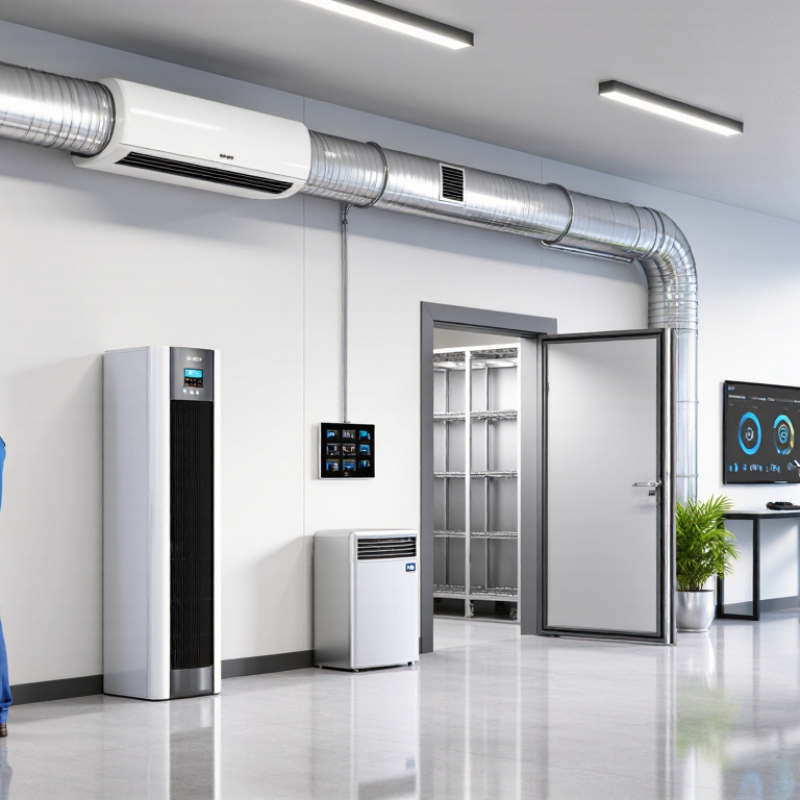
How to Choose the Right Cooling Equipment for Your Business?

Assess Your Business’s Cooling Needs and Operating Conditions

Choosing cooling equipment begins with your operating conditions, not a catalog. Measure room size, occupancy, heat-producing equipment, insulation, door openings, and local weather. A kitchen, warehouse, and server room need very different cooling profiles. The U.S. Department of Energy reports that heating, ventilation, and air conditioning can represent about 40% of commercial building energy use. Oversizing may waste energy and create short cycling. Undersizing can leave staff, products, or equipment exposed to heat stress.

Record temperatures at busy and quiet times. Note humidity, dust, cleaning routines, and available electrical capacity. For process cooling, identify the required temperature range and acceptable fluctuation. The International Energy Agency projects global cooling energy demand could more than triple by 2050. Efficiency matters, but real-world performance depends on maintenance, controls, airflow, and installation quality. A neat calculation can still be wrong when actual operating habits are ignored.

Tips: Keep a seven-day temperature log before requesting quotations. Ask for capacity at your local design temperature, not only laboratory conditions. Compare seasonal efficiency, sound levels, filter access, drainage, and maintenance hours. Leave space around outdoor units for airflow. Test alarms and backup procedures before peak season. Small details matter. I have seen equipment selected correctly on paper but weakened by blocked filters, open doors, and changing production schedules. Recheck the assumptions after installation.

Data sources: U.S. Department of Energy, Better Buildings; International Energy Agency, The Future of Cooling.

Compare Cooling Equipment Types for Different Applications

How to Choose the Right Cooling Equipment for Your Business?

Compare Cooling Equipment Types for Different Applications

Cooling equipment works best when it matches the heat load, room layout, and daily workflow. A walk-in cooler suits restaurants and grocery stores that need steady temperatures for large volumes of food. Staff can move crates directly onto shelves, but frequent door openings let warm, humid air inside. Strip curtains and organized loading can reduce this problem.

Reach-in refrigerators fit cafés, small kitchens, and shops with limited floor space. They keep frequently used ingredients close at hand, though storage capacity is modest. For offices or server rooms, precision cooling systems manage temperature and humidity more closely than general-purpose air conditioners. That control matters when equipment produces heat around the clock. Still, a careful load assessment is needed; installing excess capacity can waste energy and cause uneven operation.

Some businesses need process cooling instead. A water chiller can remove heat from manufacturing equipment, laboratory instruments, or production lines. The right setup depends on required fluid temperature, operating hours, and available ventilation. Ask a qualified technician to measure peak heat output, not just average demand. Check door seals, condenser cleanliness, and temperature logs after installation. Small checks help. Real buildings rarely behave exactly like a design estimate, and seasonal changes may reveal assumptions that need revisiting.

Determine the Capacity and Energy Efficiency You Require

Choosing cooling equipment starts with the heat your business actually produces. A small office with computers has different needs from a busy kitchen with ovens and open doors. Estimate the room’s area, ceiling height, occupancy, operating hours, and heat from equipment. These details matter.

Capacity is usually expressed in BTUs or kilowatts. An undersized unit may run constantly and still leave staff uncomfortable. An oversized unit can cool a space too quickly, cycle often, and leave humidity poorly controlled. Neither is ideal. Ask a qualified HVAC professional to assess the space, especially if it has several zones or changing daily loads. A simple floor-area estimate can be a useful starting point, not a final design.

Compare energy performance using the equipment’s published efficiency rating, but consider real operating conditions too. Check whether the unit suits your climate, ventilation needs, and hours of use. A higher-efficiency model may cost more upfront, so compare expected energy use against your budget and likely service life. Keep filters accessible and plan routine maintenance; a neglected system can lose performance. I would also revisit the estimate after a seasonal change. Buildings are not always as predictable as the spreadsheet suggests.

Check Installation, Space, and Compliance Requirements

How to Choose the Right Cooling Equipment for Your Business?

Check Installation, Space, and Compliance Requirements

Before comparing capacity or price, check whether the equipment can be installed safely in your actual building. Measure doorways, ceiling height, and service clearances; note nearby heat sources, drainage points, and electrical capacity. A unit that fits on paper may block a walkway or be difficult to maintain. Ask a qualified installer to assess the site and confirm ventilation, structural support, and noise limits. Small details matter.

Compliance is part of the selection process, not an afterthought. Requirements can vary by location and equipment type, including electrical and building codes, refrigerant rules, and ventilation standards. Confirm applicable requirements with local authorities and a licensed professional before ordering. The International Energy Agency’s 2018 The Future of Cooling report projected that global energy demand for space cooling could more than triple by 2050 without stronger efficiency measures. That makes efficiency ratings and correct sizing important, though the best option still depends on your operating hours and heat load. A rough estimate can be wrong.

Tips: Leave room for filter changes and coil cleaning. Check where condensate will drain, and verify that service access stays clear after shelves or counters are installed. Request a written load assessment and installation plan. Compare the plan with the real space; drawings sometimes miss a pipe or a low beam.

Compare Refrigerant Climate Impact When Choosing Cooling Equipment

100-year global warming potential (GWP) values; lower values indicate lower climate impact per kilogram of refrigerant released.

GWP values: R-410A 2,088; R-32 675; R-454B 466. Check local refrigerant rules, equipment compatibility, ventilation, and installation requirements before selecting a system. Source: IPCC Fourth Assessment Report (100-year GWP); R-454B value based on its published blend composition.

Estimate Lifecycle Costs and Maintenance Needs

Cooling equipment affects more than the temperature on your thermostat. The purchase price is only one part of its cost. Estimate energy use, routine service, replacement parts, and expected equipment life before comparing options. A unit with a lower upfront price may use more electricity during long operating hours. Check its rated efficiency against your actual workload, local climate, and operating schedule. Ask for estimates based on your site, not just a generic model. Small details matter.

Maintenance needs can change the real cost significantly. Review filter access, cleaning requirements, service intervals, and the availability of qualified technicians. For example, a system installed above a crowded storage area may take longer to inspect. That labor adds up. Keep a simple record of energy bills, repairs, and downtime. It will help you spot patterns, though past performance cannot predict every future failure. Cost estimates are imperfect; build in room for surprises.

Tips: Request a written maintenance schedule and a multi-year cost estimate. Ask what routine tasks your staff can safely handle. Compare expected downtime, not only repair prices. If the figures feel too tidy, ask what assumptions they leave out.

How to Choose the Right Cooling Equipment for Your Business? — Estimate Lifecycle Costs and Maintenance Needs

Compare indicative commercial cooling-system costs per ton of cooling capacity. Estimates are in USD and are intended for early-stage planning; actual costs vary with location, building conditions, equipment sizing, energy rates, and service scope.

Equipment Type Typical Installed Cost
per Ton
Estimated Annual Electricity Cost
per Ton
Typical Annual Maintenance
per Ton
Routine Maintenance Needs Typical Service Life Indicative 15-Year Cost
per Ton
Commercial split system $2,500–$5,000 $160 $60–$120 Inspect filters and coils; check refrigerant circuit, condensate drainage, electrical connections, and controls. Filter attention is typically needed every 1–3 months, depending on use and site conditions. About 12–20 years About $7,500
Packaged rooftop unit $2,000–$4,000 $170 $80–$150 Inspect or replace filters regularly; clean coils; check belts, fans, drains, economizer operation, electrical components, and refrigerant circuit. Plan seasonal inspections. About 15–20 years About $7,275
Air-cooled chiller $3,500–$7,000 $125 $120–$250 Clean condenser coils; inspect fans, pumps, refrigerant circuit, water loop, strainers, controls, and safeties. Schedule periodic professional performance and leak checks. About 20–25 years About $9,900
Water-cooled chiller system $4,500–$9,000 $115 $180–$350 Maintain the chiller, cooling tower, condenser-water loop, pumps, and water treatment. Inspect tower fill and basin; monitor water quality, scale, corrosion, and biological growth. About 20–30 years About $12,450

Estimate basis: Annual electricity costs use a planning assumption of $0.12 per kWh and 1,200 equivalent full-load cooling hours per year, with representative seasonal system efficiencies. The 15-year estimate adds the midpoint of the installed-cost range to 15 years of estimated electricity and routine maintenance costs. It excludes financing, utility demand charges, taxes, major component failures, refrigerant-rule changes, and replacement costs; obtain a site-specific lifecycle analysis before purchasing.

Choose a global leader for your hydraulics solutions

How can we help you?

Call to 0034 943884600 Contact us
Call us Contact us

We use cookies to ensure that we give you the best experience on our website. If you continue without changing your settings, we'll assume that you agree to receive cookies on the HINE website. For more information read our cookie policy page, click the link for more information.plugin cookies

ACEPTAR
Aviso de cookies