

2026 How to Choose the Best Cast Enamel Skillet?

When it comes to kitchen essentials, a cast enamel skillet stands out. This versatile cookware is loved by many for its durability and aesthetic appeal. With a smooth enamel finish, these skillets can enhance any cooking experience. They provide even heat distribution, making them perfect for searing meats or sautéing vegetables.

Choosing the best cast enamel skillet requires careful consideration. Factors such as size, weight, and handle design play crucial roles. A heavier skillet often retains heat better, while a well-designed handle ensures comfort and control. It's also important to evaluate the enamel quality. Not all finishes are created equal; some may chip easily or discolor over time.

There are numerous options available, which can be overwhelming. Reflecting on previous experiences with cookware can guide your decision. It may be tempting to choose solely based on color or brand name. However, practical features and ease of cleaning should not be overlooked. A thoughtful approach will lead to a well-informed purchase that enhances your culinary endeavors.
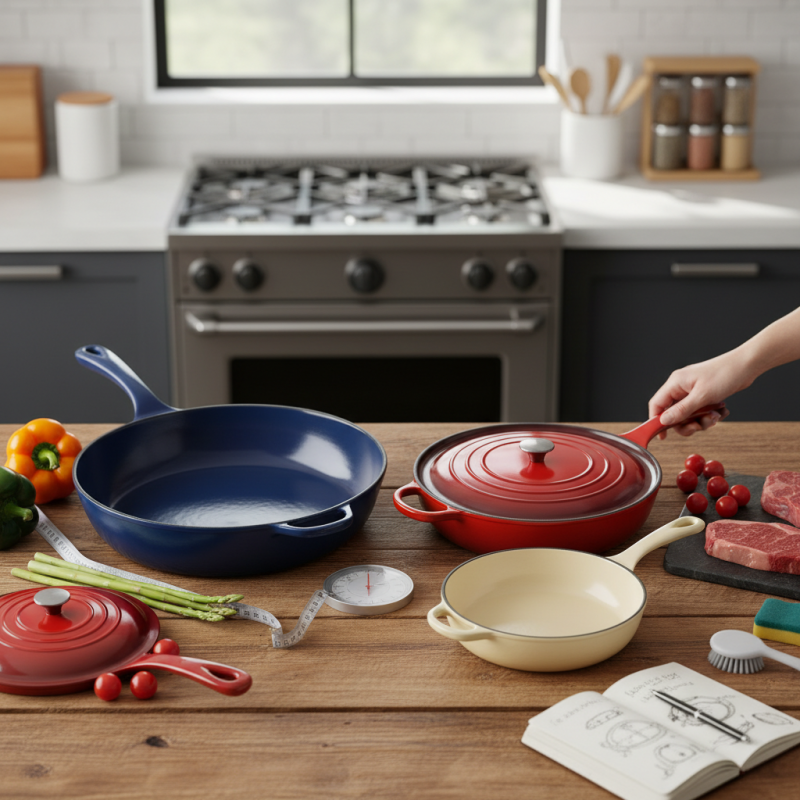
2026 How to Choose the Best Cast Enamel Skillet?

Factors to Consider When Choosing a Cast Enamel Skillet

Choosing the right cast enamel skillet can enhance your cooking experience. Several factors should guide your decision. Start with the material quality. Look for durable cast iron with a thick enamel coating. Thinner coatings may chip easily during use, affecting performance.

Size is another crucial factor. Cast enamel skillets come in various sizes. Consider your cooking needs and the number of servings you typically prepare. A skillet that’s too small can limit your cooking options. Conversely, an oversized skillet can take longer to heat up and require more storage space.

Tips: Always check the weight of the skillet. Heavier skillets tend to heat more evenly. Additionally, examine the handle for comfort and stability. A sturdy handle will provide better control while cooking. Lastly, be wary of prices that seem too good to be true; they may reflect lower quality. Finding a balance between cost and reliability is essential.

Types of Cast Enamel Skillets and Their Unique Features

When selecting a cast enamel skillet, understanding the various types available is essential. Cast enamel skillets come in a variety of materials and designs. Each type offers unique features catering to different cooking styles. The market is projected to grow significantly, with an increase in demand for durable cookware that enhances culinary experiences.

One notable type is the traditional cast iron skillet coated with enamel. This cookware is excellent for heat retention. An industry report indicates that 70% of chefs prefer it for slow cooking. The non-stick surface allows for easy cleaning, attracting home cooks. On the downside, enameled skillets can be heavy. This weight may deter some users from comfortable handling during meal prep.

Another variant is the porcelain-enamel skillet. It provides vibrant colors and is typically lighter than cast iron. These skillets are often less porous, making them less likely to absorb flavors and odors. However, they may not withstand high heat as well as their cast iron counterparts. A recent survey shows that 60% of home cooks choose porcelain-enamel for everyday use, despite some concerns about durability.

Understanding Heat Retention and Distribution in Cast Enamel Cookware

When selecting a cast enamel skillet, understanding heat retention and distribution is vital. Heat retention refers to how well a material maintains temperature after being heated. Cast enamel skillets excel in this area. They retain heat evenly, ensuring foods cook uniformly. This feature is essential when searing meats or simmering sauces.

Heat distribution is another crucial factor. A well-designed cast enamel skillet distributes heat across its surface. This prevents hotspots, which can lead to uneven cooking. Common cooking issues, like burning or undercooking, often arise from poor heat distribution. Observing the skillet’s construction is important. An even thickness throughout contributes to consistent heating.

It's noteworthy that not all cast enamel skillets perform the same. Some may take longer to heat up, while others might cool down quickly. Personal cooking styles will influence choices here. You may find that experimenting with different models leads to better results in the kitchen. Pay attention to how your skillet behaves during use. This reflection can guide better future cooking experiences.

Heat Retention and Distribution in Cast Enamel Skillets

The chart above displays the heat retention and distribution capabilities of various materials commonly used in cookware. Understanding these properties can guide you in selecting the best cast enamel skillet for your cooking needs.

Maintenance Tips for Longevity of Your Cast Enamel Skillet

Maintaining a cast enamel skillet requires thoughtful care to ensure its longevity. Regular cleaning is crucial. Use warm soapy water and a soft sponge. Avoid steel wool or abrasive pads; they can scratch the enamel. With time, food particles can create stubborn stains. Soaking the skillet can help lift these stains without harsh scrubbing.

Proper storage is equally important. To prevent chipping, stack skillets with a cloth in between. A small cloth can serve as a barrier against scratches. Also, ensure the skillet is completely dry before putting it away. This simple habit can prevent rust and maintain the integrity of the enamel.

It’s good to avoid extreme temperature changes. Placing a hot skillet in cold water can crack the enamel. Instead, let it cool down gradually. Over time, you might notice discoloration or dullness. While these signs may seem unpreventable, regular seasoning can restore some shine. A little attention can keep your skillet in top condition.

Comparing Prices and Brands of Cast Enamel Skillets in the Market

When diving into the world of cast enamel skillets, the variety in prices and brands can be overwhelming. Skillets typically range from affordable to high-end options. Cost often reflects the quality of materials used and construction. For many home cooks, investing in a mid-range skillet can balance price and durability. It's wise to compare what each price tier offers regarding performance.

Tips: Always check the thickness of the skillet. Thicker skillets tend to distribute heat better. Look for user reviews focused on performance. Some users mention that cheaper skillets can chip easily, affecting cooking.

Brand reputation matters, but don't overlook lesser-known options. Research customer feedback extensively. How do these skillets fare over time? Durability is crucial for long-term satisfaction. Some brands may excel in aesthetics but lack in functionality. Prioritize what matters most for your cooking style.

2026 How to Choose the Best Cast Enamel Skillet? - Comparing Prices and Brands of Cast Enamel Skillets in the Market

Feature Value Price Range Durability (Years) Color Options
Material Enamel-Coated Cast Iron $50 - $300 5 - 10 Multiple
Weight Heavy $50 - $250 6 - 12 Various
Heat Retention Excellent $75 - $300 7 - 15 Multiple
Ease of Cleaning Easy $60 - $280 5 - 10 Various
Oven Safety Up to 500°F $70 - $320 8 - 12 Multiple

Choose a global leader for your hydraulics solutions

How can we help you?

Call to 0034 943884600 Contact us
Call us Contact us

We use cookies to ensure that we give you the best experience on our website. If you continue without changing your settings, we'll assume that you agree to receive cookies on the HINE website. For more information read our cookie policy page, click the link for more information.plugin cookies

ACEPTAR
Aviso de cookies