

In the ever-evolving HVAC industry, selecting the right Chiller Series can be crucial for efficiency and sustainability. As John Smith, a renowned expert in refrigeration technology, once stated, "Choosing the appropriate chiller is more than just a purchase; it’s an investment in operational excellence." This highlights the importance of making informed decisions.
Understanding the specifications and performance metrics of various Chiller Series is essential. Factors such as cooling capacity, energy efficiency, and environmental impact should all be considered. It's easy to get lost in technical jargon, yet knowing your specific needs can prevent costly mistakes.
Moreover, it's common for businesses to overlook key elements, such as maintenance requirements and compatibility with existing systems. Sometimes, the most popular choice may not be the best for your unique situation. Reflecting on these factors is vital for long-term success. Ultimately, the right choice can lead to enhanced productivity and reduced operational costs.
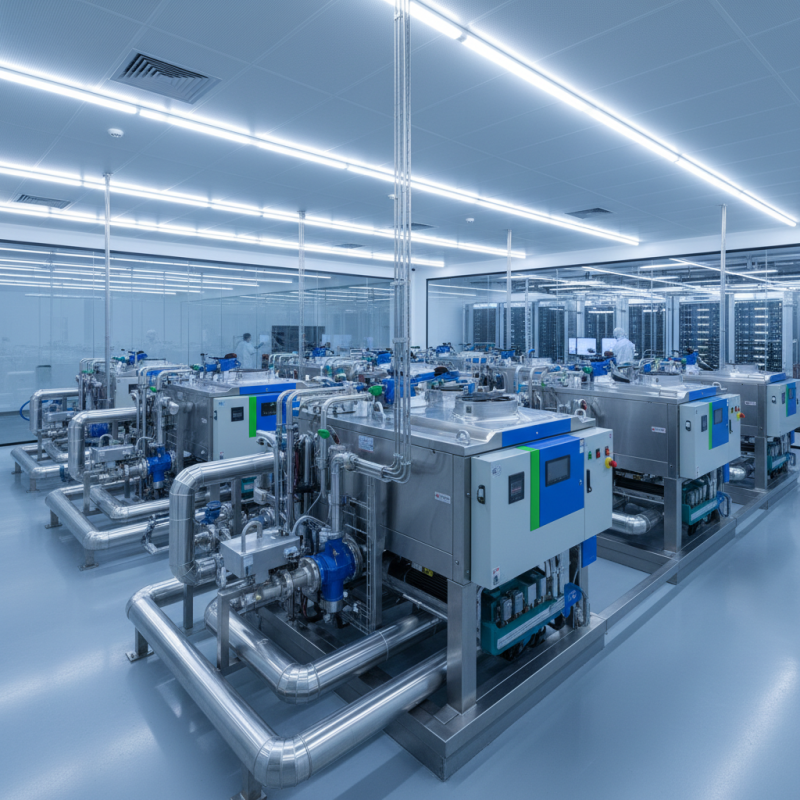
When selecting a chiller series, understanding the different types available is essential. Chillers generally fall into two categories: air-cooled and water-cooled. Air-cooled chillers utilize ambient air to dissipate heat. They are ideal for smaller operations and have lower installation costs. However, they may be less efficient in extreme heat.
On the other hand, water-cooled chillers are more efficient and suitable for larger facilities. They require a cooling tower and often consume more energy. Choosing the wrong type can lead to inefficiency. For instance, a water-cooled chiller in a compact space may face operational issues and lead to higher costs.
Factors like capacity and refrigerant type also influence your decision. Understanding these aspects can be challenging. Many overlook the importance of maintenance and energy efficiency ratings. It's vital to weigh these considerations. A chiller that seems perfect may not perform well without proper upkeep. Always reflect on the long-term implications before making a choice.
| Chiller Type | Cooling Capacity (kW) | Energy Efficiency Ratio (EER) | Application | Refrigerant Type |
|---|---|---|---|---|
| Air-Cooled Chiller | 50-300 | 3.0-4.5 | Commercial Buildings | R-410A |
| Water-Cooled Chiller | 100-1000 | 4.0-6.0 | Industrial Processes | R-134A |
| Absorption Chiller | 50-500 | 1.0-1.5 | Large Scale Cooling | Water/Lithium Bromide |
| Heat Pump Chiller | 30-200 | 3.5-5.0 | Residential and Light Commercial | R-32 |
When selecting a chiller series, understanding the cooling capacity is crucial. The appropriate capacity ensures efficiency and cost-effectiveness. Research from the American Society of Heating, Refrigerating and Air-Conditioning Engineers (ASHRAE) indicates that oversized chillers can lead to energy waste. A well-sized chiller operates efficiently, saving up to 30% on electricity costs.
Another important factor is the type of refrigerant used. Many chillers now employ low-GWP (Global Warming Potential) refrigerants. These alternatives reduce environmental impact. Data shows a shift toward these refrigerants will help industries meet regulatory standards by 2030. However, some users may neglect this aspect, risking compliance and efficiency.
Finally, consider maintenance needs. A chiller requiring frequent repairs can disrupt operations, leading to unexpected costs. According to the U.S. Department of Energy, planned maintenance can reduce repairs by 20%. Evaluating the long-term service agreements and support offered is essential. Many facilities overlook this and face higher operational risks.
This chart illustrates key factors to consider when selecting a chiller series. The data includes essential specifications such as cooling capacity, energy efficiency, noise level, maintenance frequency, and initial cost. Choose wisely to meet your specific needs effectively.
Choosing the right chiller involves understanding its efficiency ratings and performance metrics. Efficiency is crucial. A chiller with a high coefficient of performance (COP) can save money and energy. Reports indicate that chillers can consume about 25% of total energy in commercial buildings. Improving efficiency helps cut operational costs significantly.
When assessing chillers, don't overlook the importance of Energy Efficiency Ratio (EER) and Integrated Part Load Value (IPLV). An EER of 12 or higher is often considered good. However, many older models struggle to meet this benchmark. IPLV measures performance under various loads. Unfortunately, some manufacturers may highlight only peak efficiency, neglecting performance in real-world scenarios.
Additionally, be wary of misleading data. Some chillers promise low energy usage. Yet, in practice, they underperform. Understanding the specifications is crucial. Look for data from independent audits. It's vital to cross-check claims carefully. Efficiency ratings should reflect real-world usage to ensure reliability.
Choosing the right chiller series often hinges on proper sizing. This step is crucial to meet your application requirements. A well-sized chiller operates efficiently. It can save energy costs by 20% or more. According to industry reports, mismatched chillers can lead to wasting 30% more energy.
Understanding your specific needs can guide you in the selection process. If your application requires cooling for sensitive equipment, precise sizing is vital. Oversized chillers tend to cycle on and off frequently. This can wear them down faster and increase maintenance needs. Under-sized chillers, on the other hand, may not cool effectively, affecting performance.
Tip: Assess your heat load accurately. Consider peak usage times. This helps in determining the appropriate capacity. Another key factor is the ambient environment. High ambient temperatures can influence chiller efficiency.
Prioritizing these aspects might seem tedious, but it's necessary. A mismatch can lead to inefficiencies and unexpected costs. A thorough understanding of your application and environment will aid in making educated choices.
When selecting a chiller series, maintenance and support should be top of mind. Regular maintenance is crucial in ensuring optimal performance. Ignoring this aspect can lead to costly failures. A service interval may go overlooked, especially for busy facilities. Schedule regular check-ups. They can help identify issues before they escalate. Realistically, not everyone follows through consistently.
Support after your purchase is equally important. Reliable customer support can help answer questions quickly. Consider the availability of parts and service technicians. Delays can affect your operation. Having local service options is a plus. However, it's common for users to underestimate the time needed for repairs. This oversight can disrupt your workflow dramatically, so plan accordingly.
Invest in training for your team. They should understand the system's basic operations and common troubleshooting steps. However, practical experience in dealing with unexpected issues often differs from theoretical knowledge. It’s vital to create a culture of awareness around chiller maintenance. This helps everyone appreciate the importance of their role in system longevity. Recognizing that even the best systems require attention is essential.
How can we help you?
Call to 0034 943884600 Contact usWe use cookies to ensure that we give you the best experience on our website. If you continue without changing your settings, we'll assume that you agree to receive cookies on the HINE website. For more information read our cookie policy page, click the link for more information.plugin cookies
ACEPTAR