

China Top 10 Industrial Hydraulics Suppliers?
China has become a major production base for industrial hydraulics, supplying pumps, valves, cylinders, motors, power units, and complete hydraulic systems. Its suppliers serve construction machinery, agricultural equipment, mining, marine engineering, factory automation, and energy projects. However, choosing a reliable manufacturer requires more than comparing catalog prices.
John Watton, a respected hydraulic control systems author, observed, “The performance of a hydraulic system depends on the interaction of all its components.” This principle matters when evaluating China’s top industrial hydraulics suppliers. A high-quality pump cannot compensate for contaminated oil, poor sealing, weak filtration, or inaccurate valve control. Small details matter. A leaking fitting can stop an entire production line.
This article examines ten leading Chinese suppliers through practical criteria. These include product range, manufacturing experience, quality certification, export capability, engineering support, customization, and after-sales service. It also considers real operating details, such as pressure ratings, cycle frequency, ambient temperature, spare-parts availability, and response time during breakdowns.
The ranking is not absolute. Different projects require different strengths. One supplier may excel in mobile hydraulics, while another performs better in industrial presses or servo systems. Some companies have excellent factories but limited overseas support. Others communicate well but provide less transparent technical data.
That is where careful research becomes essential. Buyers should verify test reports, factory capabilities, references, and warranty terms before signing contracts. Product photographs are not enough. Supplier websites can also be incomplete or overly promotional.
China’s hydraulic sector is improving quickly, but quality remains uneven. This guide aims to provide a balanced, evidence-based starting point for identifying capable suppliers and avoiding costly assumptions.
What Are Industrial Hydraulic Suppliers in China?
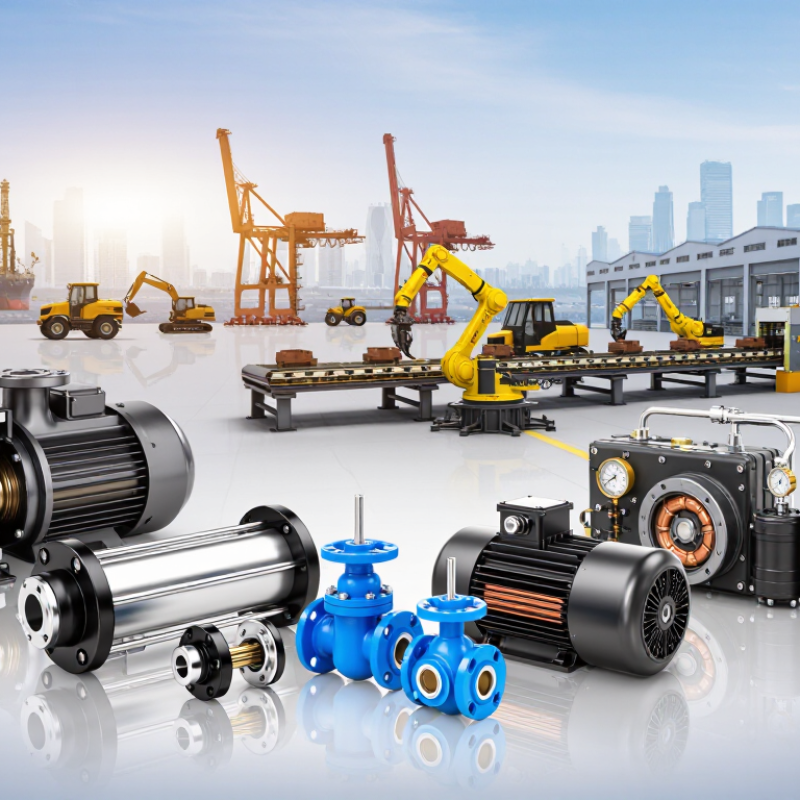
Industrial hydraulic suppliers in China are companies that design, manufacture, assemble, or distribute equipment for controlled fluid power. Their products may include pumps, valves, cylinders, motors, power units, hoses, and filtration systems. They serve factories, construction equipment makers, agricultural machinery producers, energy projects, and material-handling operations. A supplier can be a component factory, a system integrator, or a trading company. These roles are not interchangeable.
In practical purchasing, a capable supplier should explain pressure ratings, flow requirements, fluid compatibility, temperature limits, and expected duty cycles. It should provide drawings, test records, material details, and traceable quality documents. Factory visits can reveal useful details: clean assembly benches, protected storage, calibrated gauges, and organized end-of-line testing. Ask for sample performance data. Numbers matter. A polished catalog does not prove stable production.
Experienced buyers also examine response time, spare-part availability, warranty terms, and technical support after delivery. Communication may be quick, yet specifications can still be misunderstood across languages and time zones. Confirm every critical point in approved drawings and written purchase documents. Field experience shows that projects can be delayed by a small port-size error. That is easy to overlook. Suppliers should identify design limits instead of promising universal performance. A thoughtful evaluation compares engineering capability, process control, service capacity, and total operating risk—not only the lowest quotation.
China Top 10 Industrial Hydraulics Suppliers? - What Are Industrial Hydraulic Suppliers in China?
| Rank | Anonymous Supplier Profile | Primary Product Focus | Typical Applications | Typical Working Pressure | Common Manufacturing Region | Relevant Quality Evidence | Best Fit for Buyers |
|---|---|---|---|---|---|---|---|
| 01 | Mobile Hydraulic Systems Profile | Monoblock valves, sectional valves, compact power units and control assemblies | Construction equipment, agricultural machinery, lifting equipment and municipal vehicles | 160–315 bar | Zhejiang and Jiangsu manufacturing clusters | ISO 9001 quality systems; pressure, leakage and functional testing | OEMs requiring compact, cost-effective mobile hydraulics |
| 02 | Hydraulic Cylinder Manufacturing Profile | Single-acting, double-acting, telescopic and custom hydraulic cylinders | Presses, material handling systems, agricultural machinery and special-purpose equipment | 100–350 bar | Jiangsu, Shandong and Zhejiang | Dimensional inspection, surface-finish control and hydrostatic testing | Buyers needing drawings-based or low-volume cylinder production |
| 03 | Hydraulic Power Unit Profile | AC and DC power packs, motor-pump groups, reservoirs and integrated manifolds | Dock levelers, tail lifts, machine tools, compact presses and automation equipment | 70–250 bar | Shanghai, Zhejiang and Guangdong | Circuit validation, motor testing and system pressure testing | Integrators seeking ready-to-install hydraulic power packages |
| 04 | Pump and Hydraulic Motor Profile | Gear pumps, vane pumps, piston pumps and orbital-type hydraulic motors | Industrial machinery, conveyors, agricultural equipment and mobile drives | 100–350 bar | Zhejiang, Jiangsu and Guangdong | Flow, efficiency, noise, temperature-rise and endurance testing | Distributors and equipment manufacturers requiring replacement units |
| 05 | Hydraulic Valve and Manifold Profile | Directional, pressure-control, flow-control and cartridge valve manifolds | Industrial automation, presses, injection equipment and material handling | 160–350 bar | Jiangsu, Zhejiang and Shanghai | CNC machining records, contamination control and leak testing | OEM projects requiring custom hydraulic circuit integration |
| 06 | Industrial Hydraulic Press Profile | Hydraulic presses, pressing units, cylinders and complete control systems | Metal forming, powder compaction, rubber processing and composite molding | 160–315 bar | Jiangsu, Shandong and Anhui | Load testing, stroke accuracy checks and electrical safety testing | Factories purchasing complete forming or pressing systems |
| 07 | Hydraulic Filtration Profile | Suction filters, return-line filters, pressure filters and offline filtration units | Machine tools, power units, steel equipment and industrial maintenance systems | 10–420 bar | Zhejiang, Guangdong and Jiangsu | Filter-element integrity, particle-retention and pressure-drop testing | Maintenance departments focused on fluid cleanliness and uptime |
| 08 | Hydraulic Hose and Fitting Profile | Hydraulic hoses, tube fittings, adapters, quick couplings and assemblies | Construction machinery, factory automation, agricultural equipment and transport systems | 70–420 bar | Zhejiang, Hebei and Guangdong | Burst, impulse, dimensional and assembly cleanliness testing | Wholesalers and service companies needing broad connection coverage |
| 09 | Injection and Die-Casting Hydraulics Profile | High-response valves, hydraulic power units, pumps and control blocks | Plastic injection molding, die casting and high-cycle manufacturing lines | 140–350 bar | Guangdong, Zhejiang and Shanghai | Cycle-time validation, response testing and thermal performance checks | Manufacturers requiring repeatable motion and high operating cycles |
| 10 | Marine and Offshore Hydraulics Profile | Winch drives, steering systems, deck machinery and corrosion-resistant assemblies | Marine handling, shipbuilding, ports, offshore support and coastal infrastructure | 140–350 bar | Shanghai, Jiangsu, Fujian and Guangdong | Salt-spray evaluation, pressure testing and project-specific inspection records | Marine integrators requiring customized and corrosion-resistant systems |
Note: The table uses anonymous supplier profiles rather than company or brand names. Pressure ranges and applications represent common industrial offering ranges in the Chinese hydraulic equipment market; exact specifications, certifications and export capability should be verified directly before purchase.
Related Posts
-
Top 10 Hydraulic Solutions Suppliers for Global Buyers?
-

Top 10 Essential Hydraulic System Components for Optimal Performance
-
Revolutionizing Hydraulic Systems Trends and Insights at the 138th China Import and Export Fair 2025
-
The Best 10 Advantages of Pneumatic Hydraulic Systems for Your Business
-

Top 10 Hydraulic Solutions from China for Global Buyers?
-

Essential Pneumatic Hydraulic Maintenance Checklist for Optimal Performance
Choose a global leader for your hydraulics solutions
How can we help you?
Call to 0034 943884600 Contact us