

China’s paper packaging industry has become a major sourcing destination for brands, retailers, and logistics companies. Its strength comes from scale, material availability, export experience, and increasingly automated production lines. From compact folding cartons to rigid gift boxes, Chinese suppliers serve different markets and order volumes.
Industry data supports this importance. Smithers’ report, The Future of Global Packaging to 2028, identifies sustainability, e-commerce, and lightweighting as key forces shaping packaging demand. These trends directly support Paper Packaging Boxes, especially where recyclable materials and efficient shipping are priorities. China Packaging Federation publications also show the country’s continuing investment in packaging manufacturing, digital printing, and production efficiency. The details matter. A strong factory should manage paper grammage, color consistency, die-cutting accuracy, glue strength, and carton compression. A beautiful sample means little if mass production varies.
This guide reviews China’s top ten paper packaging box manufacturers through practical purchasing criteria. These include production capacity, certification transparency, customization ability, quality control, export experience, and communication reliability. Some rankings may remain debatable. Public data is not always comparable between suppliers. That is worth acknowledging.
Buyers should inspect factory records, request recent samples, and confirm material specifications before choosing a partner. FSC claims, recycled content, food-contact suitability, and testing documents should be verified independently. Pricing also requires caution. The lowest quotation may exclude tooling, proofing, shipping protection, or quality inspections. A dependable supplier delivers more than a printed box. It delivers predictable performance from the first prototype to the final shipment.
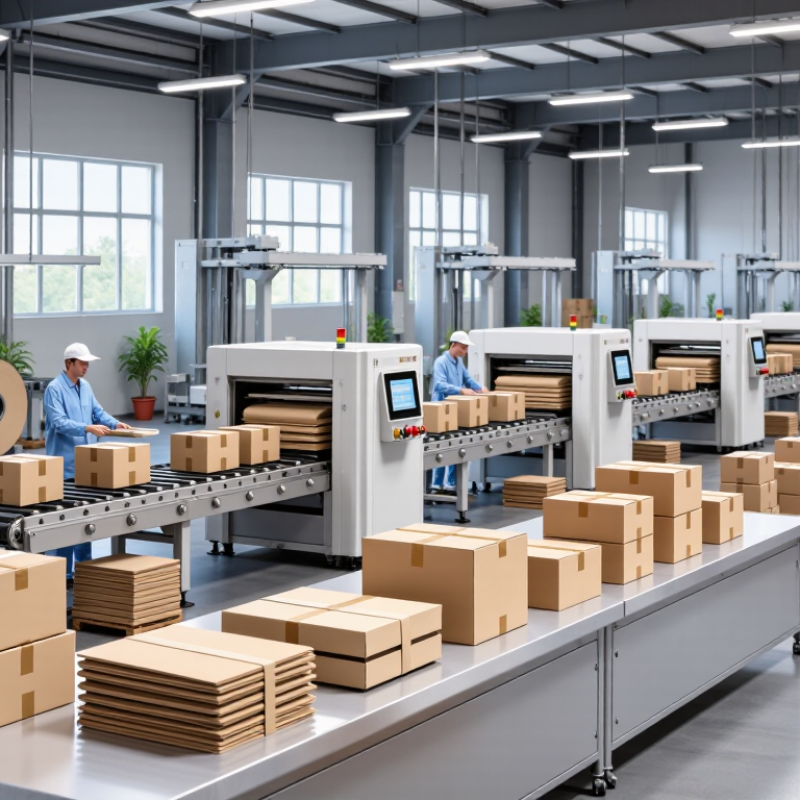
A leading paper packaging box manufacturer in China is defined by more than production scale or an attractive catalog. It should turn a product brief into a tested, repeatable box. Experienced teams ask about product weight, stacking height, humidity, delivery distance, and opening habits. Details matter. A cosmetics box may need a clean shoulder fit, while a food carton needs suitable, documented material contact compliance. Good manufacturers explain these differences in plain language.
Technical strength appears in sampling and process control. A reliable factory can provide dielines, structural prototypes, color proofs, and measurable compression or drop-test results. It should control paper thickness, folding accuracy, glue placement, and print registration across large orders. Inspectors need clear checkpoints, not vague promises. When a sample fails, the team should record the cause and revise the structure. Real experience includes mistakes.
Authority also comes from traceable evidence. Buyers should be able to review material specifications, inspection records, production photographs, and relevant certifications. Communication matters too. Timely updates on sampling, capacity, and shipment planning reduce expensive surprises. A strong manufacturer protects quality without hiding limitations. It may admit that thin recycled board cannot support a heavy product, or that a complex finish increases lead time. That honesty builds trust, even when the answer is inconvenient. The best choice is not always the largest supplier; it is the partner that consistently matches design, performance, compliance, and delivery expectations.
A credible top-ten list should measure performance, not online visibility. China Paper Association reported 129.65 million tonnes of paper and paperboard production in 2023. Consumption reached 131.73 million tonnes. This scale supports broad manufacturing capacity, but capacity alone proves little. Each manufacturer should be reviewed through factory audits, sample testing, production equipment, and documented export experience.
Quality evidence should include compression strength, moisture resistance, print accuracy, and delivery records. ISO 9001 systems can support consistency, while ISO 14001 practices show environmental management. These certificates need verification. Paperwork can look better than factory reality.
Selection should also reflect market research. Smithers identifies e-commerce growth, lightweight structures, and fiber recovery as major forces shaping paper packaging. Therefore, the evaluation should examine recyclable material choices, efficient box design, and responsible sourcing.
A strong supplier should provide clear material specifications, test reports, traceable quotations, and realistic lead times. Customer feedback matters, but it should come from several markets. One successful order is not enough. No ranking is perfect. Exchange-rate changes, paper prices, and seasonal capacity can alter results quickly.
Tips: Request a physical sample before approval. Compare the same box size and paper grade. Check the factory address and audit date. Ask how defects are recorded and corrected. A lower price may hide thinner paper, weaker glue, or higher transport damage. The final ranking should balance quality, service, compliance, sustainability, and total cost—not promotional language.
China’s top paper packaging box manufacturers differ more than their online catalogs suggest. A useful profile should examine factory experience, material control, testing, and communication. The strongest suppliers usually explain board grades clearly, provide pre-production samples, and document moisture, compression, and color checks.
One established manufacturer focuses on folding cartons for cosmetics and household goods. Another specializes in corrugated shipping boxes, using automated cutting and printing lines. A third serves food packaging projects and can provide traceable, food-contact paper records. Premium rigid-box producers often emphasize hand assembly, wrapped paper accuracy, and clean magnetic closures. Some factories support short runs for emerging businesses, while others are built for large export orders. Their strengths differ.
Several suppliers combine structural design with packaging testing. They may improve stacking strength, reduce empty space, or create inserts that prevent movement during delivery. E-commerce specialists often test boxes through drop, vibration, and compression conditions. Sustainable-focused manufacturers offer recycled boards, water-based inks, and paper-based alternatives to plastic parts. Custom engineering teams handle unusual dimensions and complex folding structures. A final group competes through fast sampling and flexible production scheduling.
However, attractive samples do not guarantee stable mass production. I would compare batch consistency, reject rates, lead times, and corrective-action records. Factory photographs are useful, but limited. A video call, sample inspection, and written specification reveal more. Some suppliers communicate well yet underestimate tooling delays. Others produce excellent boxes but respond slowly when artwork changes. The best choice depends on verified performance, not impressive claims.
The chart summarizes the number of manufacturers in a ten-company industry profile set offering each major paper packaging capability. Folding cartons and corrugated boxes show the broadest market coverage, while rigid boxes and specialty packaging represent more focused production segments.
China’s leading paper packaging box manufacturers usually offer folding cartons, rigid gift boxes, corrugated mailers, and paperboard inserts.
These products serve cosmetics, electronics, food, apparel, and retail packaging needs. Each format requires different structural strength, printing accuracy, and protection during transport.
Material selection affects both appearance and performance.
Common choices include kraft paper, white ivory board, coated paper, recycled board, and corrugated fiberboard. Kraft creates a natural texture, while coated paper supports sharper images and smoother color. Recycled board can reduce virgin fiber use, but its surface may show slight color variation. That detail matters.
Customization often begins with a dieline and a physical prototype.
Manufacturers may provide offset printing, water-based or soy-based inks, embossing, debossing, foil accents, matte lamination, and die-cut windows. Custom inserts can hold bottles, devices, or delicate accessories firmly. Measurements should be checked with the actual product, not only a computer file. Small errors become expensive at scale.
Reliable suppliers normally confirm board thickness, compression needs, color standards, minimum order quantities, and delivery schedules before production.
Sample approval and batch inspections improve consistency. Still, no finish is completely risk-free. Foil can crease, and dark colors may shift between batches. Buyers should request retained samples, packing tests, and clear quality records before approving large orders.
Choosing among China’s top paper packaging box manufacturers requires more than comparing online rankings. A suitable supplier should match your product, quantity, artwork, and delivery schedule. Ask for recent factory photos, production capacity, and sample records. A reliable manufacturer can explain paper thickness, coating options, folding methods, and printing limits in clear language.
My early mistake was judging a supplier by attractive photos alone. The sample looked excellent, but the finished boxes had weak corners and uneven color. Request a physical prototype before placing a large order. Check the board’s stiffness, glue strength, folding accuracy, and surface finish. You should also confirm quality inspections, packaging methods, replacement policies, and communication procedures. Verifiable certificates and clear documentation add confidence, but they do not replace product testing.
Tips: Compare at least three manufacturers using the same specifications. Share box dimensions, paper type, artwork files, quantity, and target market requirements. Ask whether samples come from normal production materials. Confirm lead times in writing, including approval and shipping stages. A factory may offer the lowest price, yet hidden setup fees or repeated revisions can increase the final cost. Do not ignore small warning signs. Slow replies, vague answers, or changing quotations deserve careful review. Even experienced buyers can miss details when deadlines become stressful.
| No. | Manufacturer Capability Profile | Best-Suited Box Type | Common Paper Range | Typical MOQ Benchmark | Sample Lead Time | Production Lead Time | Key Verification Points |
|---|---|---|---|---|---|---|---|
| 1 | High-volume folding carton specialist | Retail cartons, food cartons, pharmaceutical cartons | 210–600 gsm | 5,000–10,000 units | 5–10 working days | 15–25 working days | Die-cutting accuracy, color consistency, food-contact documentation, and repeat-order capacity |
| 2 | Premium rigid gift-box specialist | Book-style boxes, magnetic boxes, luxury presentation boxes | 1.2–2.5 mm greyboard with printed wrap | 500–3,000 units | 7–14 working days | 20–35 working days | Corner alignment, board flatness, wrapping quality, magnet safety, and insert fitting |
| 3 | Corrugated mailer-box producer | E-commerce mailers, subscription boxes, shipping cartons | E-flute: about 1.5 mm; B-flute: about 3 mm | 1,000–5,000 units | 5–10 working days | 15–25 working days | Edge-crush performance, board caliper, stacking strength, moisture resistance, and shipping tests |
| 4 | Short-run customization specialist | Prototype boxes, seasonal packaging, limited-edition packaging | 250–500 gsm | 100–1,000 units | 3–7 working days | 10–20 working days | Digital-print quality, setup charges, structural prototyping, artwork support, and low-volume pricing |
| 5 | Sustainable paper-packaging specialist | Recyclable retail boxes, kraft cartons, plastic-replacement packaging | 250–600 gsm kraft or recycled board | 1,000–5,000 units | 7–12 working days | 18–30 working days | Fibre source, recycled content evidence, coating recyclability, water-based inks, and certification validity |
| 6 | Luxury finishing specialist | Cosmetic boxes, jewelry boxes, premium gift packaging | 250–400 gsm cover paper on rigid board | 1,000–3,000 units | 10–15 working days | 25–40 working days | Foil adhesion, embossing depth, spot coating registration, surface protection, and visual inspection standards |
| 7 | Food and beverage carton producer | Takeaway cartons, dry-food cartons, beverage carriers | 250–500 gsm food-grade board | 5,000–20,000 units | 7–14 working days | 20–35 working days | Food-contact compliance, grease resistance, odor control, migration testing, and hygienic production procedures |
| 8 | Pharmaceutical and healthcare packaging specialist | Medicine cartons, healthcare kits, tamper-evident boxes | 250–400 gsm folding boxboard | 10,000–50,000 units | 10–15 working days | 25–45 working days | Traceability, batch control, barcode readability, tamper evidence, inspection records, and regulatory support |
| 9 | Export-oriented contract manufacturer | Multi-market retail packaging and private-label boxes | 210–600 gsm; corrugated options available | 3,000–20,000 units | 7–14 working days | 20–35 working days | Export packing, carton marking, international documentation, inspection coordination, and communication quality |
| 10 | Integrated design-to-delivery supplier | Custom structural packaging requiring design, testing, and logistics | Project-dependent; paperboard and corrugated grades | 500–10,000 units | 7–14 working days | 20–40 working days | Structural design ownership, prototype testing, quality agreement, production planning, and delivery accountability |
How can we help you?
Call to 0034 943884600 Contact usWe use cookies to ensure that we give you the best experience on our website. If you continue without changing your settings, we'll assume that you agree to receive cookies on the HINE website. For more information read our cookie policy page, click the link for more information.plugin cookies
ACEPTAR