

Choosing the right Instant Read Thermometer is more complicated than comparing display speed and price. Probe shape, sensing technology, calibration, water resistance, and reading stability all affect daily performance. A busy home cook may need a folding thermistor thermometer, while a professional kitchen may prefer a thermocouple model with interchangeable probes.
Food safety makes this decision more practical. The U.S. Department of Agriculture recommends checking internal temperatures with a food thermometer, not relying on color or cooking time. Its guidance places poultry at 165°F, ground meats at 160°F, and whole cuts of beef, pork, lamb, and veal at 145°F with rest time. The Centers for Disease Control and Prevention estimates that foodborne illnesses affect about 48 million Americans annually. Small temperature errors can therefore create large consequences.
Industry reports add useful context, although they are not perfectly consistent. Grand View Research’s smart kitchen appliances analysis highlights convenience and connected cooking as major growth drivers. Fortune Business Insights also reports expanding demand for kitchen technology and monitoring tools. Neither report isolates every Instant Read Thermometer category, which is an important limitation.
Food science writer Harold McGee wrote, “Cooking is a matter of chemistry.” That principle explains why temperature matters more than appearance. Still, faster is not always better. An infrared thermometer cannot measure a steak’s center, and even an accurate probe can mislead when placed near bone or a cold pan.
This guide examines ten major types, including thermocouple, thermistor, infrared, folding, waterproof, and leave-in designs. The categories overlap. That imperfection reflects real kitchens. Temperature tools must match the food, the workflow, and the user’s willingness to verify results.
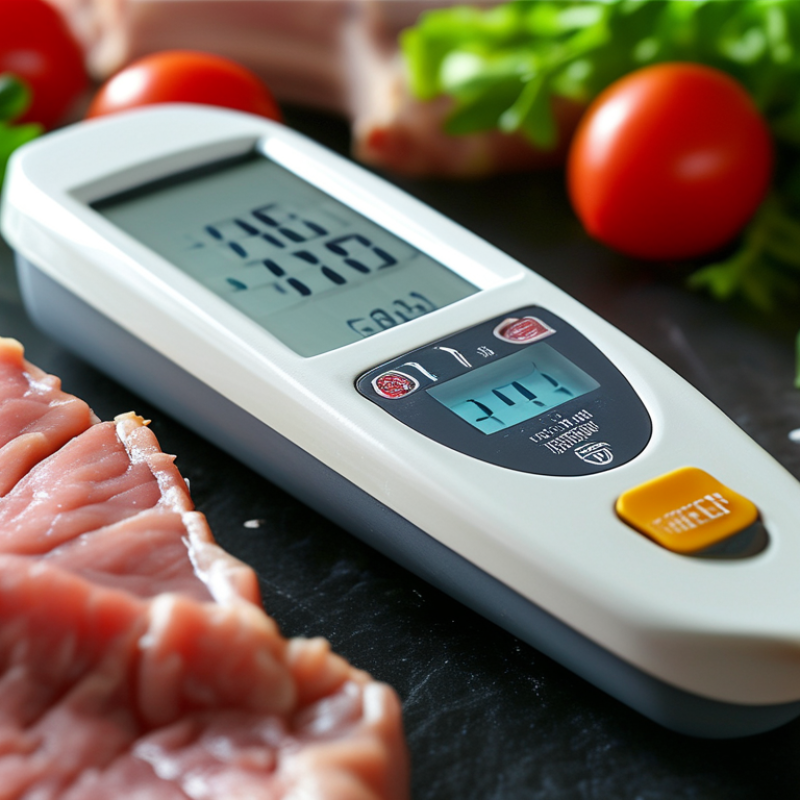
An instant-read thermometer is a fast measuring tool designed to show temperature within seconds. Unlike a leave-in thermometer, it is not intended to remain in food during cooking. Its narrow probe enters the center of a steak, roast, sauce, or baked item, where temperature matters most. The display should stabilize quickly, usually within two to five seconds.
Small differences define the main types. Digital pen thermometers suit everyday kitchen checks. Folding-probe models offer safer storage. Waterproof versions help with steaming pots and frequent cleaning. Thermocouple models respond extremely quickly and often provide excellent accuracy. Infrared thermometers read surface temperature, not the interior. Oven-safe, candy, meat, and dual-probe designs serve more specialized tasks. These ten types may look similar, but their sensors and intended uses differ.
Probe placement remains more important than speed. Avoid bones, pans, and empty pockets inside food. I once measured the edge of a roast and received a reassuringly high reading. The center was cooler. That mistake was simple, but useful. Clean and sanitize the probe between foods, then check calibration in ice water when readings seem unusual. Ice water should be close to 0°C, while boiling water changes with altitude. A thermometer can be technically accurate yet poorly used. Read the manufacturer’s stated accuracy, response time, and temperature range before trusting it. Short probes can mislead in thick foods. Extra caution helps.
Instant-read thermometers come in ten practical forms. The digital stick is compact and useful for meat, soups, and baked dishes. A thermocouple model reads faster and supports professional kitchen checks. Infrared units measure surface temperature without touching food. Dial thermometers are slower, but remain readable during busy service. Folding thermometers protect the probe inside a pocket-sized body. Waterproof models suit grilling, dishwashing areas, and humid kitchens. Oven-safe leave-in probes monitor food continuously, although they are not purely instant-read tools. Wireless probes send readings to a receiver, helping cooks avoid repeated oven opening. Candy thermometers measure dense syrups at high temperatures. Deep-fry thermometers track hot oil, where surface readings can mislead.
Speed matters. Accuracy matters more. The USDA Food Safety and Inspection Service reports that one in four hamburgers can appear safely brown before reaching a safe internal temperature. That finding supports using internal measurements, not color alone. The 2022 FDA Food Code lists 165°F for poultry and 145°F for whole cuts with a three-minute rest. A reliable thermometer should read quickly, stay stable, and fit the cooking task. Check its response in ice water when possible. I still see readings shift when the probe touches a pan. That small mistake is easy to miss. Infrared tools also struggle with steam, reflective oil, and uneven surfaces. Specifications are helpful, but technique decides whether the number is trustworthy.
This chart compares representative typical response times for ten commonly used instant-read thermometer designs. Infrared and thermocouple models generally provide the fastest readings, while traditional bimetal dial thermometers usually take longer. Actual performance varies with construction, temperature range, probe depth, airflow, and measurement conditions.
Instant-read thermometers use different sensors and measurement methods. A thermistor probe measures temperature through changes in electrical resistance. It responds quickly and works well for liquids, meat, and baked foods. A thermocouple probe measures the voltage created between two different metals. It handles wider temperature ranges and usually reacts faster. An RTD probe measures resistance changes in a carefully controlled metal element. It offers strong accuracy, although it can respond more slowly. An infrared thermometer detects thermal radiation from a surface without touching it. Steam, distance, and shiny surfaces can reduce its accuracy. A bimetallic dial thermometer uses two bonded metals that bend differently as they warm. The movement turns a needle across a dial.
Other types describe probe shapes or display methods. A liquid-crystal strip changes color when heat alters its temperature-sensitive crystals. It is convenient, but its readings are broad rather than highly precise. A surface-contact thermometer measures heat through a flat sensor touching pans, griddles, or equipment. An immersion thermometer uses a narrow probe surrounded by liquid, giving better readings in soups or oils. An air-probe thermometer measures surrounding air, not the food itself, so drafts matter. A dual-channel thermometer compares two sensors at once, such as food temperature and oven temperature. In practice, these categories can overlap. A digital probe may use a thermistor, thermocouple, or RTD inside. I have also seen quick readings become misleading when the sensor touches a pan wall. Calibration checks in ice water and boiling water reveal problems, though altitude changes boiling-point results.
| Type | How It Measures Temperature | Typical Useful Range | Typical Response | Main Strengths | Common Limitations | Typical Uses |
|---|---|---|---|---|---|---|
| K-Type Thermocouple | Two different metal wires generate a small voltage when their junction is heated. The instrument converts that voltage into a temperature reading. | Approximately −200°C to 1,260°C, depending on the probe and insulation. | Usually less than 1 second with a fine exposed-tip probe. | Very wide temperature range, rugged construction, and fast readings. | Requires correct reference-junction compensation; readings can drift or be affected by electrical noise. | Ovens, grills, industrial processes, laboratory work, and high-temperature cooking. |
| J-Type Thermocouple | Measures the voltage produced by an iron–constantan junction and calculates temperature from the thermoelectric relationship. | Approximately −210°C to 760°C. | Typically under 1–2 seconds with a small probe. | Good sensitivity in moderate-temperature applications and broad industrial availability. | The iron element can oxidize at high temperatures; it is less suitable for strongly oxidizing environments. | Metal processing, machinery checks, ovens, and general industrial measurement. |
| T-Type Thermocouple | A copper–constantan junction produces a voltage that changes predictably with temperature. | Approximately −200°C to 350°C. | Often under 1 second with a thin-tip probe. | Good accuracy and stability at low temperatures; suitable for food and refrigeration checks. | The copper element limits maximum temperature compared with some other thermocouples. | Refrigeration, frozen products, food preparation, and environmental testing. |
| E-Type Thermocouple | Uses a chromel–constantan junction; the voltage generated at the junction is converted into temperature. | Approximately −200°C to 900°C. | Usually under 1 second with an exposed or reduced-mass tip. | High thermoelectric output and good sensitivity over a wide range. | Requires compatible connectors and calibration; probe construction strongly affects durability. | Scientific instruments, cryogenic testing, furnaces, and process monitoring. |
| Platinum RTD | A platinum sensing element changes electrical resistance in a highly repeatable way as its temperature changes. | Approximately −200°C to 850°C, depending on the element and probe design. | About 1–10 seconds for many compact probes. | Excellent stability, repeatability, and measurement accuracy. | Usually costs more and responds more slowly than a very fine thermocouple probe. | Food processing, laboratories, HVAC systems, and industrial process control. |
| Thermistor | A temperature-sensitive semiconductor changes resistance significantly with temperature; the electronics translate that resistance into a reading. | Commonly about −50°C to 150°C, although specialized versions cover wider ranges. | Often 1–5 seconds, depending on probe size and insulation. | High sensitivity, low cost, and good performance in the everyday temperature range. | Limited high-temperature range and a nonlinear resistance curve requiring calibration. | Kitchen thermometers, medical devices, appliances, and electronics monitoring. |
| Infrared Thermometer | An infrared detector senses thermal radiation emitted by a surface and estimates temperature using the measured radiation and emissivity setting. | Commonly −50°C to 500°C or higher, depending on the instrument. | Usually less than 1 second. | Non-contact measurement, very fast operation, and useful for moving or inaccessible surfaces. | Measures surface rather than internal temperature; steam, distance, reflective surfaces, and incorrect emissivity can affect accuracy. | Griddles, ovens, machinery, electrical panels, and surface inspections. |
| Bimetallic Coil Thermometer | Two bonded metals expand at different rates, causing a coil or strip to move. The mechanical movement is linked to a temperature scale. | Commonly about −50°C to 300°C. | Usually 10–30 seconds; some models require stirring or movement for a stable reading. | Simple, durable, battery-free operation and easy visual reading. | Slower response and generally lower precision than electronic probe thermometers. | Ovens, cooking liquids, grills, and basic process monitoring. |
| Semiconductor Temperature Sensor | A silicon-based junction or integrated circuit produces a voltage or digital signal that varies with temperature. | Commonly about −55°C to 150°C. | Typically under 1–5 seconds, depending on packaging. | Compact size, simple electronic integration, and good repeatability in moderate conditions. | Usually unsuitable for very high temperatures and can be affected by heat transfer through the housing. | Digital thermometers, appliances, computers, and environmental devices. |
| Liquid-Crystal Strip Thermometer | Thermochromic liquid crystals change their reflected color at calibrated temperature intervals, providing a visual indication. | Usually a narrow range, commonly about 0°C to 120°C. | Several seconds to approximately 1 minute, depending on contact and material thickness. | Thin, inexpensive, lightweight, and requires no battery or electrical connection. | Limited precision, narrow temperature range, and sensitivity to lighting, surface contact, and wear. | Aquariums, storage containers, brewing checks, and quick visual monitoring. |
Note: Temperature ranges and response times are representative values for common sensor constructions. Actual performance depends on probe size, protective sheath, calibration, measurement medium, and instrument design.
In home kitchens, I use pen-style thermometers for checking chicken, steaks, soups, and leftovers. They are compact, fast, and easy to clean. Folding-probe models suit crowded countertops because the stem locks away safely. Thermistor thermometers work well for everyday cooking, although thick foods may need a few extra seconds. Thermocouple thermometers respond faster and help professionals check several items during busy service.
Accuracy still depends on correct placement. The sensor tip must reach the food’s center, not touch a pan or bone.
Infrared thermometers are useful for measuring griddle surfaces, pizza stones, and frying oil from a distance. They read surfaces only. That limitation is easy to forget. Waterproof thermometers are practical near sinks, grills, and steaming pots, while oven-safe wired models monitor roasts without opening the oven door.
Candy and deep-fry thermometers are designed for very hot liquids and offer clear temperature ranges. They are less convenient for quick meat checks. Leave-in wireless thermometers suit long cooks, such as barbecue or overnight roasting, but their probes can be slower to reposition.
Specialized instant-read thermometers also include two-probe models for comparing food and cooking surfaces. This helps when a grill has uneven heat. I prefer models with readable displays, strong probe seals, and simple calibration checks in ice water.
Even reliable tools can drift after drops, steam exposure, or years of use. My own readings are not always perfect, especially with thin fish or shallow sauce. Rechecking the same spot improves confidence.
Clean the probe between foods, and verify safe internal temperatures with a current food-safety reference.
Choosing an instant-read thermometer starts with the food, not the gadget. The ten common types include digital probe, thermocouple, folding, infrared, wireless, leave-in, oven-safe dial, bimetal, candy, and deep-fry models. Each solves a different problem.
For steaks, a thin digital probe limits juice loss and reads quickly. For candy or oil, choose a long probe with a high-temperature range. Infrared models suit pan surfaces, but they cannot measure a roast’s center. Wireless and leave-in thermometers help with long cooking sessions. Waterproof construction matters when washing after messy preparation.
Accuracy deserves attention. The FDA Food Code 2022 requires food temperature devices to perform within ±2°F, or ±1°C, across their intended range. That standard is practical, not decorative. USDA FSIS guidance lists 165°F for poultry, 160°F for ground meats, and 145°F for whole cuts with a three-minute rest. Check the center and avoid touching bone or the pan. Calibration is easy to overlook. I have trusted a fast reading that was simply wrong. Ice-water testing should show 32°F, while boiling-water testing depends on altitude. Readability also matters: large digits, a backlight, and a stable grip can prevent mistakes beside a hot oven. A smaller probe is often better.
How can we help you?
Call to 0034 943884600 Contact usWe use cookies to ensure that we give you the best experience on our website. If you continue without changing your settings, we'll assume that you agree to receive cookies on the HINE website. For more information read our cookie policy page, click the link for more information.plugin cookies
ACEPTAR