

China Top PU Sofa Cushion Foam Mould Manufacturers?

China’s upholstered furniture market demands more than attractive designs. It requires stable tooling, repeatable foam density, and dependable production support. A reliable Pu Sofa Cushion Foam Mould manufacturer should understand all three.

Dr. Kevin J. Brown, a polyurethane process consultant, states, “A good mould protects consistency before the foam reaches the cutting table.” This practical view matters. Small differences in cavity temperature can change cushion firmness, surface texture, and recovery. Experienced manufacturers inspect these details during design, sampling, and final testing.

The best suppliers usually combine CNC machining, mould-flow knowledge, and hands-on foam experience. They should explain material choices clearly. Aluminium moulds may support faster heat transfer, while steel options can suit demanding production cycles. Vent placement also deserves attention. Poor venting may leave marks or create uneven filling near corners.

Details matter.

When comparing China’s top manufacturers, buyers should examine sample quality, dimensional tolerance, maintenance guidance, and communication speed. A polished catalogue proves very little. A documented trial means more. Production photographs, inspection records, and transparent adjustment policies provide stronger evidence.

However, no supplier is perfect. Even a capable factory may need several trials for unusual cushion shapes. This is where honest technical discussion becomes valuable. Buyers should share foam chemistry, target hardness, fabric requirements, and expected volumes before requesting a final quotation.

The right Pu Sofa Cushion Foam Mould partner does not merely sell tooling. It helps reduce waste, stabilize comfort, and protect long-term production efficiency. Yet every claim should be tested against samples, measurements, and real manufacturing conditions.
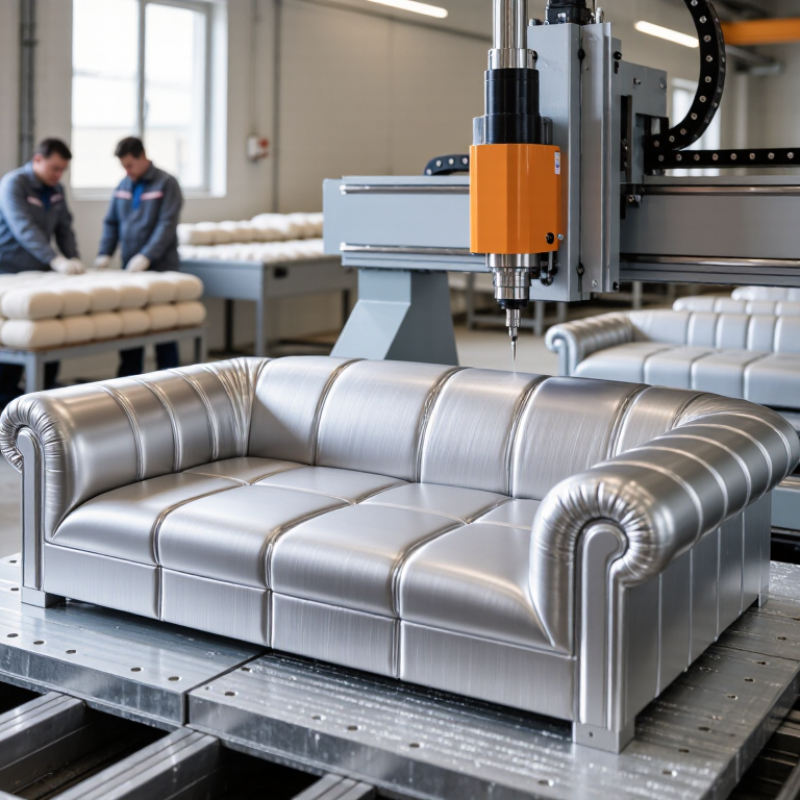
China Top PU Sofa Cushion Foam Mould Manufacturers?

What Are PU Sofa Cushion Foam Moulds?

PU sofa cushion foam moulds are shaped tools used to form flexible polyurethane foam into seat, back, or armrest cushions. They usually contain a cavity that matches the cushion’s planned size and contour. Liquid foam chemicals are injected, expand, and cure inside the mould.

A reliable mould needs accurate dimensions, smooth surfaces, suitable release treatment, and controlled ventilation. These details affect foam density, firmness, edge definition, and final comfort. Aluminium moulds are common for repeated production because they transfer heat efficiently. Steel options can provide longer service life, but they may increase weight and machining costs. In practical manufacturing, even a small cavity error can create uneven thickness or uncomfortable pressure points. That issue is easy to overlook.

Tips: Check the mould drawing against the finished cushion. Test foam expansion before full production. Inspect corners carefully. Rounded transitions usually reduce tearing and improve comfort. Ask manufacturers about temperature control, vent placement, cleaning access, and expected cycle life. A sample trial is more reliable than a promise. Measurements should be recorded after curing, not only before injection. Some designs look excellent on paper but need adjustment after the first test. That is normal.

How Are PU Sofa Cushion Foam Moulds Designed and Manufactured?

Designing a PU sofa cushion foam mould starts with the cushion’s final performance. Engineers define density, hardness, compression set, airflow, and dimensional tolerance. According to ISO 3386-1 testing principles, foam firmness must be measured under controlled compression. This data guides the cavity profile and support zones. A seat cushion may need firmer foam near the front edge. Back cushions usually require softer rebound.

Mould designers then convert foam geometry into a precise cavity model. They check shrinkage, parting lines, vent locations, and safe demoulding angles. CNC machining commonly forms aluminum or steel mould components. Small vents help release trapped air during foaming. Poor venting can create surface marks, voids, or uneven density. This detail is often underestimated.

During production, technicians control polyol and isocyanate ratios, mixing speed, temperature, and curing time. Trial pours reveal whether the foam fills every corner. Measurements are compared with the approved drawing and performance targets. Fortune Business Insights reported that the global polyurethane foam market reached about 46.68 billion US dollars in 2023, showing strong demand for controlled manufacturing. Yet market growth does not guarantee quality. A mould may look accurate but still produce unstable cushions after repeated cycles. Continuous inspection, documented adjustments, and practical testing remain essential. Some designs need revision. That is normal.

What Makes a Top Chinese Foam Mould Manufacturer?

A top Chinese PU sofa cushion foam mould manufacturer proves capability through repeatable results, not attractive catalogs.

Its engineers should understand cushion geometry, foam expansion, release behavior, and production pressure. They translate drawings into steel or aluminum tooling with controlled parting lines and stable dimensions. Practical experience shows in small details.

Vent holes must support even filling without leaving visible marks on the cushion surface. Radii should prevent tearing at corners during demoulding.

Reliable manufacturers use documented design reviews before machining begins. They check shrinkage allowances, draft angles, insert positions, and expected foam density.

During trials, technicians inspect sample cushions for hardness variation, surface defects, flash, and dimensional drift. Measurements should be recorded, not remembered.

A capable team compares trial data with the approved drawing and adjusts the mould when evidence requires it.

This process reflects expertise, but it also reveals honesty. No supplier gets every trial perfect.

Trust grows through traceable materials, calibrated gauges, clear inspection reports, and realistic delivery updates. The manufacturer should explain maintenance intervals, spare-part needs, and cleaning methods in practical language.

After-sales support matters when a vent blocks or a cushion edge changes after repeated cycles. Engineers who answer with measurements are more dependable than those offering vague promises.

There is room for improvement.

Some factories may optimize machining speed while underestimating trial time, creating avoidable delays. Buyers should request sample records, tolerance data, and corrective-action reports before placing a large order.

Which Materials and Technologies Improve Mould Performance?

PU sofa cushion foam mould performance depends heavily on material selection and thermal control. High-strength aluminum alloys offer fast heat transfer and easier handling. Steel moulds provide greater wear resistance for high-volume production. A practical design often combines both materials. Steel can protect clamping areas, while aluminum supports rapid curing around the cushion cavity.

Surface treatment also affects release quality and service life. Hard anodizing can improve aluminum’s surface hardness and reduce abrasion. Replaceable stainless-steel inserts protect corners exposed to repeated demoulding. However, coatings are not permanent. Foam residue, aggressive cleaning, and careless tools can damage them. Regular inspection is still necessary.

Modern manufacturers use CNC machining to maintain accurate cavity dimensions. CAD and flow analysis help identify uneven filling before production begins. Proper venting prevents trapped air and visible surface marks. Small vacuum channels may improve detail reproduction on contoured cushions. Independent temperature zones create more stable foam density across large moulds. Some factories add sensors to record pressure and mould temperature during each cycle. This data supports faster troubleshooting and more consistent results.

Details matter. A one-millimeter mismatch can distort a seam line. Yet technology alone cannot solve poor maintenance. Operators must clean vents, check seals, and measure wear regularly. In real production, the best mould is not always the most complex one. It is the one that remains accurate after repeated daily use.

China Top PU Sofa Cushion Foam Mould Manufacturers? Which Materials and Technologies Improve Mould Performance?

Mold material selection directly affects heat transfer, dimensional stability, wear resistance, and maintenance intervals in PU sofa cushion foam production. The chart compares commonly used mold materials using representative room-temperature reference values.

Aluminum provides very high thermal conductivity for faster and more uniform cooling, while P20 and H13 tool steels provide higher hardness and better resistance to wear and repeated clamping. Conformal cooling channels, accurate CNC machining, polishing, and suitable surface coatings can further improve temperature uniformity, release performance, and mould service life. Values are approximate reference figures; exact performance depends on grade, heat treatment, mould geometry, and process conditions.

How Can Buyers Evaluate China’s PU Foam Mould Suppliers?

Buyers evaluating China’s PU foam mould suppliers should look beyond attractive catalogs and low quotations. A reliable supplier explains how mould design affects foam density, airflow, curing time, and cushion comfort. Ask for drawings, steel specifications, tolerance ranges, and maintenance records. Experienced engineers should discuss these details clearly, not hide behind sales language.

Request a sample mould trial before placing a large order. Measure cavity dimensions, parting lines, vent performance, and surface finish after production. Check whether the supplier records temperature, pressure, and cycle time during testing. Small inconsistencies may become visible as uneven sofa cushions. They matter. Review the factory’s machining equipment, inspection tools, worker training, and production capacity through evidence rather than promises.

Traceability also deserves attention. Each mould should have identifiable material records, revision files, and inspection reports. Ask how the supplier handles design changes, spare parts, repairs, and delayed delivery. A responsive technical team is valuable when foam behavior changes during mass production. However, a polished factory tour can still mislead. I once focused too much on equipment and not enough on after-sales communication. That was a costly oversight. Buyers should compare several suppliers using the same checklist, test realistic cushion shapes, and leave room for imperfect results during development.

China Top PU Sofa Cushion Foam Mould Manufacturers? - How Can Buyers Evaluate China’s PU Foam Mould Suppliers?

Evaluation Dimension What Buyers Should Check Practical Benchmark or Requirement Recommended Evidence Suggested Weight
Mould Design Capability Ability to convert sofa cushion drawings, 3D files, draft angles, inserts and parting lines into a production-ready mould design. The supplier should provide a 3D mould model, 2D manufacturing drawings, draft-angle details, parting-line locations, vent layout and demoulding plan before machining. Design review records, drawing revision history and an approved design-for-manufacturing checklist. 15%
Dimensional Accuracy Control of cavity dimensions, symmetry, mounting points and critical cushion profile features. Use project-specific tolerances approved on the drawing. A buyer may use ±0.10 mm for selected machined features and ±0.20 mm for less critical areas only when the design and process support those limits. Coordinate-measuring-machine report, inspection plan and first-article report linked to drawing dimensions. 15%
Foam Density Compatibility Whether the mould is suitable for the specified flexible polyurethane foam formulation and target density. Flexible PU foam density is commonly specified in kg/m³. The mould supplier should confirm compatibility with the buyer’s formulation, free-rise density, moulded density, cream time, rise time and cure behavior. Material-processing questionnaire, trial records and density test results measured according to ISO 845 or ASTM D3574. 10%
Mould Material and Surface Finish Material selection, corrosion resistance, wear resistance, polish level and release-agent compatibility. Material grade and surface-finish requirements must be stated on the technical specification. The selected finish should support easy demoulding without creating visible marks on the cushion surface. Material certificate, hardness record, surface-roughness report and photographs of cavity surfaces. 10%
Venting and Air-Release Design Prevention of trapped air, voids, surface defects, incomplete filling and local density variation. The design should identify vent locations, vent-cleaning access and any vacuum or assisted-air-release requirements. Venting must be validated during mould trials rather than judged only from drawings. Mould-flow or process review, trial photographs, defect-rate records and corrective-action reports. 10%
Heating and Temperature Uniformity Uniform heating, temperature-control method, sensor placement and prevention of cold or overheated zones. The supplier should define the operating temperature range required by the foam system and demonstrate temperature stability at multiple cavity locations during a trial. Temperature-mapping report, sensor calibration records and production trial data. 8%
Cooling, Demoulding and Cycle Time Ease of opening, release-agent access, manual or automatic demoulding and repeatable cycle time. Cycle time should be established through a production-representative trial, including filling, curing, opening, demoulding, cleaning and reset time. Time-stamped trial records, operator work instructions and cycle-time capability data. 8%
Foam Performance Verification Whether trial cushions meet the agreed density, hardness, resilience, tensile strength, tear strength and compression-set requirements. Acceptance limits must be defined in the purchase specification. Relevant test methods may include ISO 845 or ASTM D3574 for density, ISO 3386-1 for hardness, ISO 1798 for tensile and elongation, and ISO 1856 for compression set. Independent or in-house laboratory reports using the agreed test method, sample conditioning and acceptance limits. 12%
Quality Management Control of incoming materials, machining, assembly, trial production, final inspection and nonconforming products. A documented quality system should include inspection checkpoints, calibrated measuring equipment, traceability and corrective-action procedures. ISO 9001 certification can support evaluation but does not replace product inspection. Quality manual, valid certificate where applicable, process-control plan, calibration list and sample inspection records. 8%
Prototype and Trial Support Ability to conduct design validation, mould trials, sample approval and corrective iterations before mass production. The supplier should provide a trial plan covering sample quantity, foam formulation, processing conditions, dimensional inspection, surface inspection and approval criteria. Trial protocol, sample approval form, defect list, corrective-action plan and final trial report. 7%
Delivery and Project Control Control of design approval, material procurement, machining, assembly, trial, inspection, packing and shipment. The supplier should provide a milestone schedule with named deliverables, revision control and a clear method for reporting delays or technical changes. Project schedule, weekly progress reports, packing specification and shipment inspection checklist. 5%
After-Sales Service and Spare Parts Availability of technical support, replacement components, maintenance instructions and response procedures. The contract should define warranty scope, response time, replacement-part identification, preventive-maintenance intervals and responsibility for approved design changes. Warranty terms, spare-parts list, maintenance manual and documented service-response process. 5%
Total Suggested Evaluation Weight 100%
Buyer evaluation note: Treat the benchmark values as starting points for a project-specific specification. Final acceptance should be based on approved drawings, the selected PU foam formulation, documented mould trials and agreed test methods rather than on catalogue claims alone.

Choose a global leader for your hydraulics solutions

How can we help you?

Call to 0034 943884600 Contact us
Call us Contact us

We use cookies to ensure that we give you the best experience on our website. If you continue without changing your settings, we'll assume that you agree to receive cookies on the HINE website. For more information read our cookie policy page, click the link for more information.plugin cookies

ACEPTAR
Aviso de cookies