

China Best Fluid Power Manufacturers for Global Buyers
Global buyers comparing China’s fluid power manufacturers need more than an attractive price list. They need dependable performance, clear documentation, and support that continues after shipment. A hydraulic pump may look polished on a factory floor, yet its real value appears under pressure, heat, and repeated operating cycles. Small details matter. Seal materials, port dimensions, noise levels, and test records can shape a system’s reliability.
Anthony Esposito, author of Fluid Power with Applications, provides a useful engineering lens. A paraphrase of a principle reflected in his work is: “Reliable fluid power depends on matching components to the system’s actual demands.” This is not presented as a verbatim quotation. It is a reminder that buyers should assess more than catalogue specifications. Ask manufacturers how they test pumps, valves, cylinders, and power units. Request traceable material information, inspection procedures, and evidence of quality controls. Then compare lead times, customization limits, communication, and after-sales service against your project needs.
China’s supplier base is broad, and capabilities vary. Some factories focus on standard components; others build customized hydraulic or pneumatic assemblies. A polished website is not proof of production capacity. Neither is a low quote. Video audits, sample orders, and independent inspections can help close that gap. No shortlist is perfect. Even careful checks may miss a detail, especially when technical requirements are still changing. This guide introduces manufacturers for global buyers and offers practical points for evaluating their fit, capabilities, and reliability before making a sourcing decision.
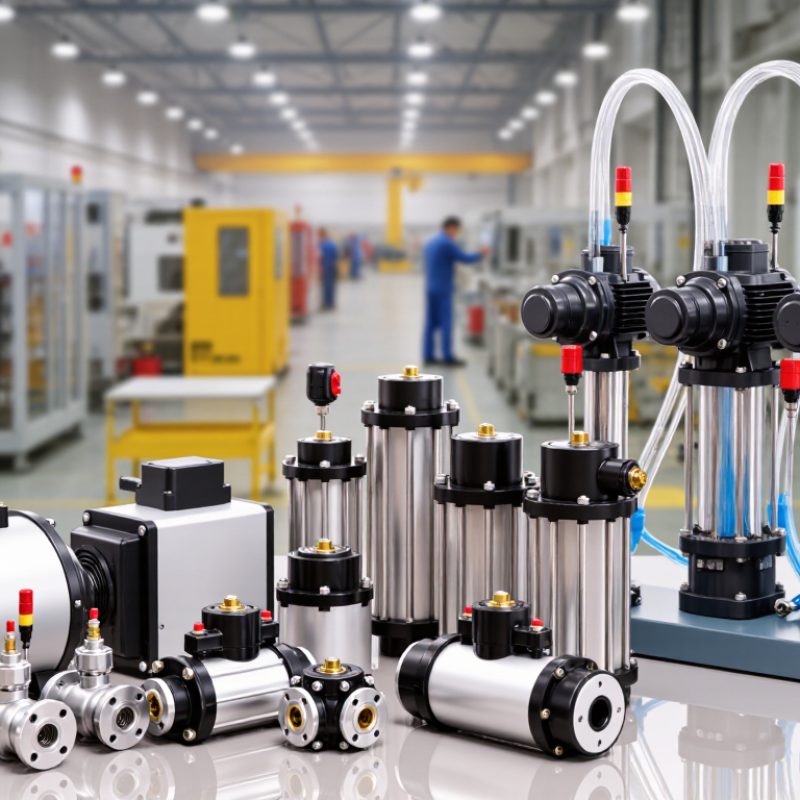
China’s Fluid Power Manufacturing Industry and Global Market Role
China Best Fluid Power Manufacturers for Global Buyers
China’s fluid power industry combines component production, precision machining, and export supply chains. Grand View Research estimated the global fluid power equipment market at approximately US$48.3 billion in 2023. Its report projected a 4.6% compound annual growth rate from 2024 to 2030. This forecast points to continuing demand across construction machinery, agriculture, and industrial equipment. The picture is uneven. Market growth does not guarantee consistent product quality.
Chinese manufacturers supply hydraulic pumps, cylinders, valves, and pneumatic components to buyers worldwide. Production capacity can support both standard orders and custom specifications. Yet real-world performance depends on details: seal materials, surface finishes, pressure testing, and documented tolerances. Buyers should assess these factors alongside price. Ask for test records and confirm that stated operating conditions match the intended equipment. A neat catalogue is not proof of reliable service.
Tip: Request sample inspection reports and clarify warranty terms before placing a large order. Compare pressure ratings, material specifications, and spare-part lead times. Small differences matter. A supplier’s ability to explain them clearly is useful evidence of process control.
| Industry Segment | Main Product Types | Typical Applications | Indicative HS Classification | Global Sourcing Relevance | Key Buyer Checks |
|---|---|---|---|---|---|
| Hydraulic pumps and motors | Hydraulic pumps, hydraulic motors, and related power-transmission components | Mobile machinery, construction equipment, agricultural equipment, industrial machinery, and material-handling systems | HS 8413 may cover pumps for liquids; HS 8412 includes certain hydraulic engines and motors. Classification depends on product design and customs rules. | China’s manufacturing base supplies components for domestic equipment production and international industrial supply chains. | Confirm displacement, rated pressure, speed range, fluid compatibility, mounting dimensions, shaft configuration, and performance test conditions. |
| Hydraulic cylinders | Single-acting and double-acting linear hydraulic cylinders | Construction and agricultural machinery, lifting equipment, presses, and industrial automation | HS 8412.21 generally covers hydraulic linear-acting cylinders; verify the current tariff schedule in the destination market. | Standard and application-specific cylinder production supports both equipment assembly and replacement-part demand. | Check bore, stroke, operating pressure, mounting style, rod material, seal compatibility, port specification, and applicable dimensional standards. |
| Hydraulic valves and control components | Directional, pressure-control, flow-control, and check valves | Hydraulic power units, machinery control circuits, mobile equipment, and production lines | HS 8481 may apply to many valves used in piping or fluid systems; the exact classification depends on construction and function. | Component availability can support the assembly, maintenance, and repair of hydraulic systems across multiple industries. | Verify flow capacity, pressure rating, response characteristics, leakage limits, port or manifold interface, and electrical requirements for solenoid-operated products. |
| Pneumatic cylinders and actuators | Linear cylinders, compact cylinders, and rotary actuators | Packaging, assembly, machine tools, material handling, and factory automation | HS 8412.31 generally covers pneumatic linear-acting engines and motors; confirm the applicable national tariff code. | Pneumatic components are widely used in automation systems where compressed air provides actuation. | Check bore, stroke, operating pressure, cushioning, mounting, air-port size, seal material, and dimensional interchangeability. |
| Pneumatic valves and air-preparation components | Directional control valves, regulators, filters, lubricators, and combination units | Compressed-air circuits, automated production equipment, and pneumatic tooling | HS 8481 may apply to certain valves; other air-preparation products may fall under different headings depending on the item. | These products serve equipment builders and maintenance markets that use compressed-air systems. | Confirm connection size, pressure range, flow capacity, filtration rating where applicable, electrical interface, and required air-quality conditions. |
| Hydraulic power units and integrated systems | Packaged assemblies combining a reservoir, pump, motor, valves, and controls | Machine tools, presses, lifting systems, industrial equipment, and specialized machinery | Classification varies with the unit’s components, function, and customs interpretation; assess the complete assembly rather than assuming a single code. | Integrated sourcing can simplify system assembly, but requires clear technical specifications and interface coordination. | Review circuit diagrams, duty cycle, heat dissipation, reservoir capacity, filtration, noise limits, electrical supply, and safety documentation. |
| Standards and conformity considerations | System design, component dimensions, safety, testing, and technical documentation | Equipment intended for international installation, integration, and maintenance | Not applicable; standards are separate from customs classification. | International buyers commonly specify relevant standards and destination-market requirements in purchasing documents. | Where applicable, assess ISO 4413 for hydraulic systems, ISO 4414 for pneumatic systems, and relevant product-specific standards. Request evidence for any claimed certification or conformity. |
| Export and logistics planning | Finished components, assemblies, spare parts, and replacement products | Original equipment production, aftermarket supply, and project-based procurement | Use the current HS nomenclature and destination-country tariff schedule; classification should be confirmed for each product. | International purchasing can involve export documentation, customs clearance, freight planning, and destination-market compliance. | Agree on drawings and revisions, inspection criteria, packaging, lead time, warranty terms, spare-part support, shipping terms, and required export documents. |
Related Posts
-

Unveiling the Future of Fluid Power Hydraulics in Sustainable Engineering
-
Unlocking the Secrets of Fluid Power Mechanics for Everyday Applications
-
How to Understand Fluid Power Systems and Their Applications?
-
Understanding the Importance of Hydraulic Components in Modern Machinery
-
Understanding the Power Behind Fluid Power Hydraulics in Everyday Machines
-

Top 10 Essential Hydraulic System Components for Optimal Performance
Choose a global leader for your hydraulics solutions
How can we help you?
Call to 0034 943884600 Contact us