

Finding reliable Sus201 Stainless Coils from China requires more than comparing the lowest online quotation. Buyers should examine the supplier’s manufacturing experience, material records, inspection process, and export history. A polished website is useful, but it does not prove consistent quality.
Experienced Chinese stainless steel mills and established metal traders usually provide mill test certificates, chemical composition reports, coil dimensions, surface finish details, and mechanical property data. Ask whether the material meets the required ASTM, JIS, or EN specifications. Confirm the grade carefully, because SUS201 can vary in nickel and manganese content. That difference affects corrosion resistance, forming performance, and final use.
A practical search should include verified manufacturers, independent sourcing platforms, and regional stainless steel markets. Request recent production photographs. Check coil edges, surface protection, packaging, and marking before shipment. A credible supplier should explain minimum order quantities, lead time, payment terms, and FOB or CIF pricing clearly. Third-party inspection can add confidence, especially for a first order.
Price still matters. However, an unusually low offer may exclude testing, export packing, or inland transportation. That assumption can be wrong. Buyers should compare complete landed costs instead of reading one number in isolation. Some suppliers communicate quickly but provide vague technical answers. Treat that as a warning sign, not a small inconvenience.
This guide explains where to buy Sus201 Stainless Coils from China and how to assess supplier reliability. It focuses on practical verification, technical suitability, and transparent purchasing decisions. The best supplier is not always the largest one. It is the company that can consistently match documented specifications, communicate honestly, and deliver coils that perform as expected.
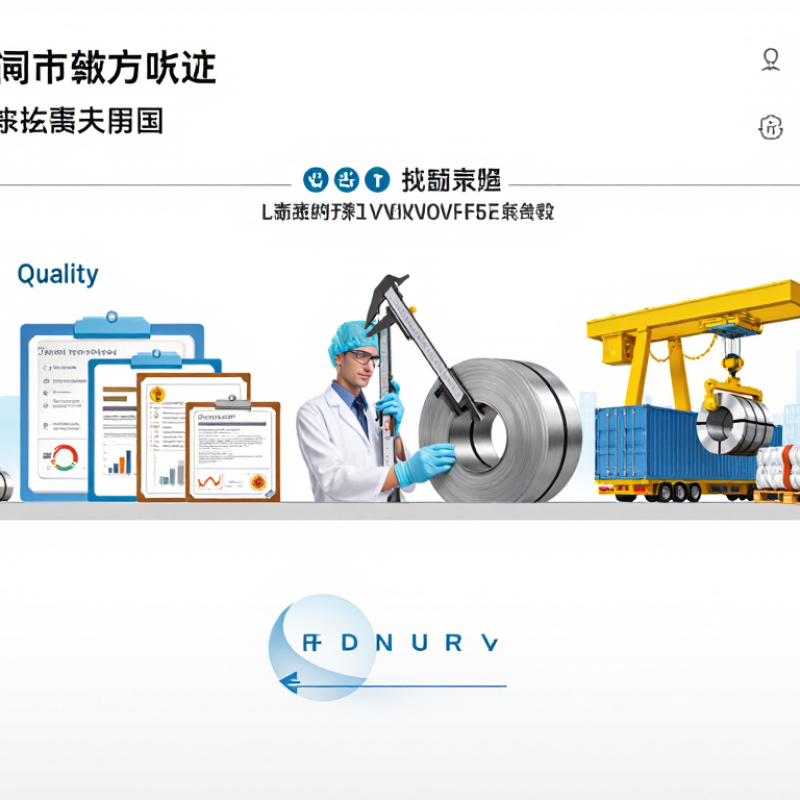
SUS201 stainless coil is a Cr-Mn-Ni austenitic grade. Its typical chemistry includes 16–18% chromium, 3.5–5.5% nickel, and 5.5–7.5% manganese, according to JIS G4304 ranges. It offers good formability and strong work hardening. Typical minimum tensile strength reaches about 520 MPa, while yield strength is near 275 MPa. However, its corrosion resistance is generally below SUS304, especially in salty or acidic environments. That difference matters. In 2023, global stainless crude steel production reached about 58.4 million tonnes, according to worldstainless statistics. China remained the largest producing region, supporting a broad coil supply base.
Common applications include kitchen utensils, sinks, appliance panels, decorative trim, light enclosures, and formed components. Cold rolling can create bright surfaces and tighter thickness control. Yet surface appearance alone proves little about grade. Coil buyers in China should request the standard, thickness tolerance, heat number, and mechanical test results. A mill certificate should match the actual coil, not only a quotation sheet. Some specifications vary between standards, so assumptions can cause expensive mistakes.
Tips: Confirm SUS201 chemistry before ordering. Check salt-spray needs carefully. Ask for sample testing when corrosion exposure is uncertain. Inspect edges, surface scratches, camber, and coil weight before shipment. Price is useful, but it is not proof of quality. For humid interiors, SUS201 may perform adequately; outdoor coastal use deserves a more cautious review.
SUS201 is an austenitic stainless steel that reduces nickel content by using higher manganese and nitrogen levels. The chart shows representative JIS SUS201 composition ranges for the principal alloying elements, expressed in weight percent. Actual limits can vary slightly by product standard, thickness, and mill certificate.
Common applications include kitchen equipment, sinks, cookware, decorative panels, architectural trim, indoor furniture, welded tubing, and general light-duty fabrication. When buying SUS201 coils from China, verify the JIS grade, coil dimensions, surface finish, mechanical properties, and inspection certificate.
Reliable SUS201 coil manufacturers are easier to identify through evidence than attractive websites. In my sourcing experience, a serious supplier provides a clear factory address, production photos, and direct technical contacts. Ask for recent mill test certificates showing chemical composition, tensile strength, yield strength, and elongation. Compare these values with the agreed standard, such as ASTM A240 or EN 10088.
Request a small sample before placing a large order. Check the coil’s thickness, width, surface finish, edge condition, and internal diameter with simple measuring tools. SUS201 may vary in nickel and manganese content, so laboratory verification can prevent costly misunderstandings. A dependable manufacturer should explain its heat number and maintain traceability from melting to shipment. It should also accept reasonable third-party inspection.
Look beyond sales promises. Review the manufacturer’s quality procedures, calibration records, packaging method, and export experience. Strong packaging uses moisture-resistant wrapping, protective edges, and secure steel straps. Ask how the supplier handles thickness tolerance or surface defects. The answer matters.
Factories sometimes outsource part of production. That is not automatically unacceptable, but it requires disclosure and control. I would request production records, inspection reports, and a written specification before payment. Clear communication is another practical test. Slow replies, vague certificates, or pressure to skip sampling deserve caution. Even experienced buyers can overlook small details, especially when prices appear unusually attractive.
Where to Find SUS201 Stainless Coil Suppliers in China
Finding reliable SUS201 stainless coil suppliers in China requires more than comparing online prices. Start with established industrial directories, regional steel markets, and professional metal exhibitions. Look for suppliers with clear factory addresses, production capabilities, and export experience. A serious supplier should explain coil width, thickness tolerance, surface finish, hardness, and monthly capacity without vague answers.
Request recent mill test certificates and verify the chemical composition before placing an order. Ask whether the material meets the agreed standard, such as ASTM or equivalent requirements. You can also request production photographs, sample coils, and a video inspection. An independent inspection company may check dimensions, surface defects, packaging, and loading records. This costs more, but it can prevent expensive misunderstandings. I have seen buyers focus too heavily on low prices. That approach often creates quality problems later.
Tips: Compare at least three suppliers. Check certificates against the actual heat number. Confirm payment terms, lead time, coil weight, and protection against moisture. Ask for written responses, not only chat messages. If a supplier avoids technical questions, pause the negotiation. Factory visits are useful, but they are not perfect proof. Production conditions can change after the visit. A small trial order is usually wiser than a large first shipment. Also, clarify whether SUS201 suits your forming, welding, and corrosion requirements. It may not perform well in every environment.
| Sourcing Dimension | Recommended Location or Channel | Relevant Product or Service Information | Key Documents or Standards to Request | Buyer Verification Point |
|---|---|---|---|---|
| Major Stainless-Steel Manufacturing Regions | Fujian, Guangdong, Jiangsu, Zhejiang, and Shandong | These coastal provinces have established stainless-steel processing, slitting, warehousing, and export logistics networks. | Factory address, processing capability statement, export documentation, and production or trading authorization. | Confirm whether the seller is a mill, service center, stockholder, or trading company. |
| Industrial Trading and Wholesale Markets | Specialized stainless-steel distribution centers in Foshan, Wuxi, Taizhou, and nearby industrial areas | Suitable for comparing available stock, surface finishes, thicknesses, widths, and slitting services from multiple suppliers. | Stock list, material test certificate, packing list, and commercial invoice sample. | Check whether the coil is in stock or will be produced after order confirmation. |
| Direct Factory Procurement | Cold-rolling mills and stainless-steel processing plants with export experience | Usually more suitable for repeat orders, customized dimensions, controlled tolerances, and scheduled production. | Quality manual, inspection procedure, mill test certificate, ISO 9001 certificate if claimed, and production lead-time statement. | Request a factory video inspection or independent third-party audit before placing a large order. |
| Material Designation | SUS201, commonly referred to as AISI 201 or 201 stainless steel | A chromium-manganese-nickel austenitic stainless steel. Its exact chemistry may vary by applicable specification and product grade. | Specify the required standard, chemical composition, mechanical properties, and product form in the purchase contract. | Do not approve material based only on the designation “201”; verify the certificate and test results. |
| Applicable Product Standards | Use the standard required by the destination market | Common references include ASTM A240 for plate, sheet, and strip; JIS G4304 or JIS G4305 for stainless products; and applicable Chinese GB/T standards. | Ask the supplier to state the exact edition and scope of the standard on the quotation and certificate. | Ensure the standard covers coils or strips, not only plate or sheet products. |
| Common Product Form | Cold-rolled stainless-steel coil or slit strip | Cold-rolled coils are commonly supplied for kitchenware, decorative applications, metal fabrication, tubing, and general industrial processing. | Product description, coil ID and OD, coil weight, edge condition, surface finish, and dimensional tolerance. | Confirm whether the material is full-width coil, narrow slit coil, or cut-to-length material. |
| Typical Thickness Range | Often available from approximately 0.3 mm to 3.0 mm for cold-rolled products | Actual availability depends on the supplier’s rolling, annealing, leveling, and slitting equipment. | Thickness tolerance requirement, measurement method, and inspection frequency. | Request a sample measurement report, especially for thin-gauge material. |
| Typical Width Range | Commonly supplied in standard mill widths or custom slit widths | Full-width coils and slit coils can be prepared for fabrication lines, provided the requested width is within the supplier’s equipment range. | Nominal width, width tolerance, burr requirement, edge type, and slitting plan. | Confirm the maximum coil width and minimum slit width before requesting a formal quotation. |
| Surface Finishes | 2B, BA, No. 1, No. 4, and other specified finishes | 2B is a common cold-rolled finish; BA is brighter; No. 4 is a brushed finish; No. 1 is generally associated with a hot-rolled, annealed, and pickled surface. | Surface-finish reference, sample photographs, physical sample, and roughness requirement where applicable. | Compare the supplied finish with an approved sample rather than relying only on finish terminology. |
| Chemical Composition Verification | Independent laboratory or supplier laboratory with traceable testing equipment | Testing may include chromium, nickel, manganese, carbon, silicon, nitrogen, phosphorus, and sulfur content. | Heat number, chemical analysis, spectrometer report, and material test certificate. | Match the heat number on the coil, certificate, packing label, and inspection report. |
| Mechanical Property Verification | Supplier quality department or accredited third-party laboratory | Typical checks include tensile strength, yield strength, elongation, hardness, and bend performance when required by the selected standard. | Tensile test report, hardness report, bend test result, test method, and sampling location. | Confirm that the test direction and test method meet the purchase specification. |
| Corrosion and Grade Suitability | Application-specific technical review before purchase | SUS201 may be selected for cost-sensitive indoor or mildly corrosive applications, but it is not a universal substitute for higher-nickel stainless grades. | Application description, environment assessment, corrosion requirement, and technical approval record. | Evaluate exposure to salt, chemicals, humidity, heat, and outdoor conditions before selecting the grade. |
| Sample and Pre-Production Approval | Supplier sample service or small trial order | A trial coil or slit sample can verify thickness, width, surface appearance, edge quality, flatness, and fabrication performance. | Approved sample, signed technical specification, inspection checklist, and deviation approval process. | Use the approved sample as the reference for mass production and final inspection. |
| Packaging and Export Handling | Export-capable warehouse or processing facility near a major Chinese port | Stainless coils are commonly protected with waterproof paper, steel or plastic strapping, corner protection, and suitable outer wrapping. | Packing specification, coil weight, lifting instructions, container-loading plan, and photographs before shipment. | Specify whether eye-to-wall or eye-to-sky loading is required and confirm moisture protection. |
| Supplier Comparison Criteria | Compare at least three qualified suppliers using the same specification | Evaluate material compliance, dimensional tolerance, finish consistency, production capacity, lead time, payment terms, and export experience. | Formal quotation, technical datasheet, certificate sample, inspection plan, and delivery schedule. | Compare total landed cost rather than only the quoted price per metric ton. |
| Pre-Shipment Inspection | Independent inspection agency or buyer-appointed quality inspector | Inspection can cover quantity, dimensions, surface, marking, packaging, heat numbers, certificates, and random sampling. | Inspection report, photographic record, dimensional report, and nonconformity procedure. | Link final payment or shipment release to the agreed inspection requirements when appropriate. |
Buying SUS201 stainless coils from China requires more than checking a dollar-per-ton figure. Price comparisons become meaningful only when specifications match. Compare grade, thickness, width, surface, coil weight, tolerance, packaging, and delivery terms. An EXW offer may look cheaper than a CIF offer, but freight and insurance are missing. Also check slitting, export packing, inspection, and bank charges. These details change the real landed cost.
The World Stainless Association reported 58.4 million tonnes of global stainless crude steel production in 2023. China produced about 36 million tonnes, showing the scale of its supply base. Scale does not guarantee consistent quality.
Quality should be verified through a mill test certificate, chemical analysis, and mechanical results. SUS201 contains less nickel than 304, so corrosion performance can differ sharply in humid or salty environments. Confirm chemistry against JIS G4304 or the agreed specification. Request PMI testing when the application is sensitive. Inspect coil edges, burrs, scratches, waviness, and telescoping under warehouse lighting. One imperfect but useful lesson: photographs rarely reveal mixed coils or hidden surface defects.
Export service also matters. A reliable supplier should explain production timing, container loading, document accuracy, and claim handling. Ask for recent inspection records, not only polished samples.
Tips: Request two quotations with identical specifications and Incoterms. Calculate landed cost per usable tonne. Check whether the supplier can provide traceability from coil number to certificate. A small trial order may expose packaging or tolerance problems before a full shipment.
Buying SUS201 stainless coils from China requires more than comparing prices. I recommend checking the supplier’s legal company details, production capability, and recent export experience. Ask for a clear quotation showing grade, thickness, width, surface finish, coil weight, and tolerance. Small details matter. If these items remain vague, the final material may not match your equipment.
Request a mill test certificate for each heat number. Check its chemical composition, mechanical properties, dimensions, and testing standard. The certificate should match the actual coil markings and packing list. For larger orders, an independent inspection can verify thickness, surface quality, coil weight, and loading photos. This adds cost, but it can prevent expensive disputes. Do not guess.
The sales contract should state inspection rights, approved samples, packaging, delivery time, and claim procedures. Confirm the Incoterm, loading port, insurance responsibility, and document list before payment. Ask whether the seller provides the commercial invoice, packing list, certificate of origin, and bill of lading. I have seen shipping delays caused by one missing document. That experience changed my checklist. I still review it twice, because confidence is not proof. Also confirm container loading methods, moisture protection, and storage conditions during transit.
How can we help you?
Call to 0034 943884600 Contact usWe use cookies to ensure that we give you the best experience on our website. If you continue without changing your settings, we'll assume that you agree to receive cookies on the HINE website. For more information read our cookie policy page, click the link for more information.plugin cookies
ACEPTAR