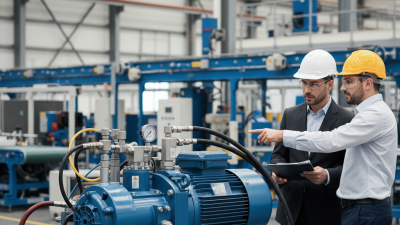

Why Choose Pneumatic and Hydraulic Systems?

Choosing between pneumatic and hydraulic systems is rarely a simple matter of preference. Engineers examine force, speed, operating temperature, available space, and maintenance requirements before selecting either technology. Pneumatic systems use compressed air for clean, rapid movement, while hydraulic systems transfer power through pressurized fluid. Each approach solves different industrial problems.

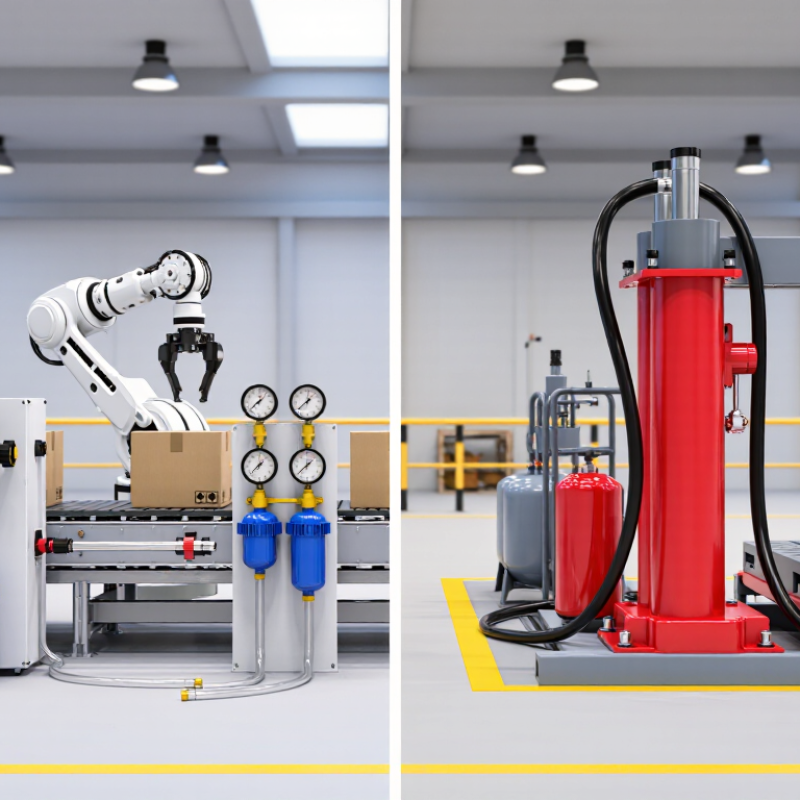
Pneumatics often suit packaging lines, robotic grippers, and lightweight clamping equipment. Their components are usually compact, responsive, and relatively easy to replace. A cylinder can move repeatedly beside a conveyor without creating an electrical spark at the actuator. Hydraulics deliver higher force for demanding applications, including presses, lifting platforms, and mobile construction equipment. A hydraulic cylinder can raise heavy machinery smoothly, even under substantial loads.

The decision depends on real operating conditions. Air leaks can reduce pneumatic efficiency and create distracting noise. Hydraulic systems can suffer from fluid contamination, seal wear, or temperature-related viscosity changes. These details matter. Experienced technicians inspect filters, hoses, fittings, and pressure readings during routine service. They also follow manufacturer instructions and recognized safety practices, rather than relying only on initial performance tests. No system is perfect.

Reliable design requires more than comparing pressure ratings. Engineers should calculate the required load, duty cycle, response time, energy consumption, and consequences of failure. A practical trial may reveal vibration, heat buildup, or unexpected maintenance access problems. Those findings deserve attention. With careful assessment, professional installation, and consistent monitoring, pneumatic and hydraulic technologies can provide dependable power for many modern systems. Still, the best choice may change as production goals, environmental conditions, or equipment layouts evolve.
Why Choose Pneumatic and Hydraulic Systems?

What Are Pneumatic and Hydraulic Systems?

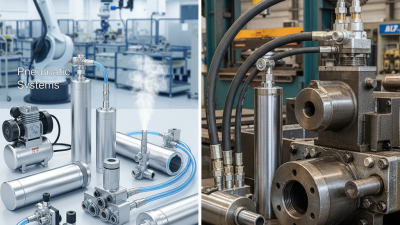
Pneumatic and hydraulic systems use pressurized fluids to produce controlled movement. Pneumatic systems use compressed air, while hydraulic systems use pressurized liquid, usually specialized oil. Both rely on pumps or compressors, valves, hoses, actuators, and controls. The actuator changes fluid pressure into useful motion.

Pneumatic equipment is often clean, fast, and suitable for repetitive tasks. It commonly operates grippers, cylinders, sorting mechanisms, and packaging tools. Air compresses easily, so movement can feel springy under changing loads. Hydraulic equipment uses nearly incompressible liquid, delivering greater force and smoother control. It suits lifting platforms, presses, mobile machinery, and heavy industrial equipment. The oil also transfers heat, but contamination can damage valves and seals.

Choosing between them requires more than comparing pressure ratings. Consider force, speed, accuracy, operating temperature, noise, maintenance access, and leak consequences. In a workshop, technicians should inspect hose connections, filters, gauges, and seals before adjusting pressure. Small leaks can waste energy and create unsafe movement. Pneumatic systems may need dry, clean air. Hydraulic systems demand careful fluid selection and filtration.

The difference is not always simple. A fast machine may still need hydraulic control. A powerful machine may use air for lighter movements. Engineers sometimes select a system too early, before measuring the real load. That mistake deserves reconsideration. A clear load profile and maintenance plan usually lead to a safer, more reliable choice.

How Do Pneumatic and Hydraulic Systems Work?

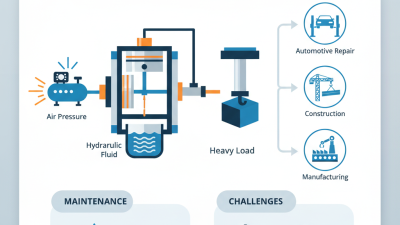
Pneumatic and hydraulic systems convert fluid power into controlled movement. Pneumatic systems use compressed air. A compressor raises air pressure, while a receiver stores it for short demand peaks. Valves then direct air through tubing toward a cylinder or rotary actuator. The actuator extends, retracts, lifts, or clamps. Air is clean and fast, but it compresses. That softness can reduce positioning accuracy under changing loads.

Hydraulic systems use a pump to move nearly incompressible fluid. Pressure builds when resistance appears, not simply because the pump runs. Directional valves guide fluid into a cylinder or motor. A relief valve limits dangerous pressure spikes. Hydraulic oil also transfers heat and lubricates internal parts. This creates high force in compact equipment, although contamination, heat, and seal wear require disciplined maintenance. The U.S. Department of Energy’s Improving Compressed Air System Performance sourcebook reports that compressed air can consume 10% or more of industrial electricity. It also notes that leaks may waste 20–30% of compressor output. That figure is easy to underestimate.

Tips: Check pressure at the actuator, not only at the regulator. Listen for leaks during quiet shifts. Use filtration suited to the fluid and environment. ISO 4413 and ISO 4414 provide useful hydraulic and pneumatic safety frameworks. Still, standards do not replace site testing. A neat schematic can hide pressure loss, undersized lines, or an unsuitable cylinder. Engineers should record cycle time, load, temperature, and actual energy use before choosing a system.

Why Choose Pneumatic and Hydraulic Systems?

Typical operating pressure comparison and how pressure affects system behavior

Pneumatic systems use compressed air and commonly operate near 6–7 bar, making them clean, fast, and suitable for repetitive motion and moderate force. Hydraulic systems use pressurized fluid and often operate between 100 and 250 bar, allowing them to produce much higher force and precise load control.

In both systems, a pump or compressor creates pressure, valves control the direction and flow, and an actuator converts fluid energy into linear or rotary motion. The values shown are representative operating points; actual pressure depends on the equipment and application.

What Are the Main Advantages of Each System?

Why Choose Pneumatic and Hydraulic Systems?

What Are the Main Advantages of Each System?

Pneumatic systems use compressed air to create quick, controlled movement. They suit packaging lines, light assembly, and repetitive gripping tasks. Their components are generally clean, lightweight, and simple to replace. Air also tolerates frequent starts and stops. That matters on busy production floors. If a cylinder leaks, however, the compressor may run longer and waste energy. Noise can become a problem too, especially in a small workshop.

Hydraulic systems transfer force through pressurized fluid. This gives them a clear advantage when equipment must lift, press, or hold heavy loads. A compact hydraulic cylinder can deliver powerful movement at a controlled speed. Operators often value that steady force in presses, lifting platforms, and mobile machinery. Hydraulic systems can also maintain pressure under demanding conditions. They require disciplined maintenance. Dirty fluid, worn seals, or a loose fitting may cause slow movement and unexpected downtime.

The choice depends on force, speed, cleanliness, and operating conditions. Pneumatics are often practical for fast, lighter actions. Hydraulics are stronger for high-load applications. Yet the simplest option is not always the best one. I have seen project plans favor air systems without measuring compressor losses. That decision looked efficient on paper. Field performance proved otherwise. Engineers should check duty cycles, pressure requirements, temperature, and service access before selecting either system. A well-sized system usually performs better than an impressive but oversized design.

How Do Pneumatic and Hydraulic Systems Differ?

Pneumatic and hydraulic systems both transmit power through pressurized fluids, but their working behavior differs sharply. Pneumatic systems use compressed air, which is light and naturally compressible. Hydraulic systems use liquid, usually oil or water-based fluid, which changes volume very little under pressure. That difference affects control, speed, force, and maintenance.

In a workshop test, a pneumatic cylinder moved quickly and returned smoothly after a valve opened. Its exhaust produced a sharp hiss. The same-sized hydraulic cylinder delivered much greater pushing force, useful for pressing, lifting, or holding heavy loads. Hydraulic motion often feels steadier because the fluid resists compression. Pneumatic equipment can feel springy, especially when the load changes suddenly. This small delay is easy to overlook.

Pneumatic systems usually need clean, dry air, suitable filters, and regular leak checks. A loose fitting can waste energy and make the actuator weaker. Hydraulic systems require careful fluid control, hose inspection, and pressure management. A tiny leak may spread across a machine and create a slippery work area. Hydraulic components are often heavier, while pneumatic components can be simpler to install. However, air preparation equipment adds cost and noise. I once treated a noisy air line as harmless, but it indicated a worn seal. That mistake changed how I inspect equipment. Choosing between them depends on required force, response speed, operating environment, cleanliness, and acceptable maintenance effort.

Why Choose Pneumatic and Hydraulic Systems? — How Do Pneumatic and Hydraulic Systems Differ?
Comparison Dimension Pneumatic Systems Hydraulic Systems Typical Selection Guidance
Power Medium Uses compressed air, typically supplied by an air compressor, receiver, filters, regulators and valves. Uses pressurized liquid, usually hydraulic oil or another application-specific fluid, supplied by a pump, reservoir, valves and actuators. Choose air where cleanliness, simplicity and rapid motion are priorities; choose liquid power where high force and precise load control are required.
Typical Pressure Range Common industrial operating pressures are approximately 5–10 bar (0.5–1.0 MPa), depending on the equipment and application. Common industrial operating pressures are approximately 70–350 bar (7–35 MPa), with some specialized systems operating outside this range. Hydraulic systems generally provide substantially higher pressure and force capability.
Force and Power Density Lower force density because air is compressible. Suitable for light to moderate loads and many gripping, clamping and positioning tasks. High force and power density because hydraulic fluid is relatively incompressible. Suitable for heavy lifting, pressing, forming and mobile machinery. For the same actuator size, hydraulics normally deliver greater force.
Motion Speed Often enables fast actuator movement and quick repetitive cycling, although speed can vary with load, flow controls and air-line conditions. Can provide controlled movement over a broad speed range, but maximum speed may be limited by heat generation, flow capacity and hydraulic circuit design. Use pneumatics for rapid repetitive strokes; use hydraulics when controlled force and stable movement matter more than cycle speed.
Positioning Accuracy Basic systems may have limited accuracy because compressed air can act like a spring. Accuracy improves with suitable sensors and closed-loop controls. Generally offers better force and position control, particularly with appropriate valves, sensors and feedback systems. Hydraulics are usually preferable for precise load holding and controlled positioning.
Energy Efficiency Can be less efficient overall because compressing air produces heat and pressure losses occur through generation, treatment and distribution. Can transmit power efficiently over short and moderate distances, but pump losses, throttling, leakage and fluid heating reduce system efficiency. Compare the complete system, including power generation, control losses, duty cycle and maintenance—not only actuator efficiency.
Leakage Characteristics Air leaks are generally clean and do not create oil contamination, but they can cause noise, pressure loss and wasted compressor energy. Fluid leaks can reduce performance and may create slip hazards, environmental concerns, fire risks or contamination of products and equipment. Pneumatics are often favored where fluid contamination must be minimized; hydraulics require strong leak prevention and fluid management.
Cleanliness Suitable for clean environments when properly filtered and when lubricants or exhaust contaminants are controlled. Hydraulic fluid can be unsuitable for certain clean processes unless the system uses compatible fluids, seals and containment practices. For food, pharmaceutical and electronics applications, evaluate air quality, fluid compatibility and contamination-control requirements.
Heat Management Typically produces less localized heat at the actuator, but compressor operation and pressure losses can generate substantial heat upstream. Heat can accumulate in the hydraulic fluid due to pump inefficiency, throttling, leakage and high-duty operation; cooling may be required. Hydraulics need careful thermal design in continuous or high-power applications.
System Components Common components include compressors, air receivers, dryers, filters, regulators, valves, tubing and pneumatic cylinders or motors. Common components include pumps, reservoirs, filters, pressure-control valves, flow-control valves, hoses or pipes and hydraulic cylinders or motors. Both technologies require correctly sized energy sources, control valves, actuators, filtration and safety devices.
Maintenance Requirements Focuses on air quality, compressor service, filter and dryer maintenance, leak detection, tubing condition and lubrication where required. Focuses on fluid cleanliness, filtration, reservoir condition, hose and seal inspection, pressure checks, temperature monitoring and leak control. Pneumatic maintenance is often simpler; hydraulic maintenance can be more demanding because contamination and fluid condition strongly affect reliability.
Noise Exhaust air and compressors can be noisy. Mufflers, enclosures and suitable exhaust-management devices may reduce sound levels. Pumps, valves and fluid flow can also generate noise and vibration, especially at high pressure or when cavitation occurs. Noise control should be included in the system design for either technology.
Operating Environment Works well in many industrial environments and can be suitable where electrical sparks or hydraulic-fluid contamination are concerns, subject to applicable safety requirements. Well suited to heavy-duty, outdoor and mobile applications when components and fluids are selected for temperature, load and environmental conditions. Assess temperature, dust, moisture, corrosion, hazardous-area classification and required protection levels before selection.
Load Holding Air compressibility can allow movement or drift unless mechanical locks, rod locks or suitable control methods are incorporated. Can hold loads effectively with properly designed valves, counterbalance devices and load-holding circuits, although leakage and valve behavior must be considered. Hydraulics are commonly selected for heavy load holding, but no system should rely on pressure alone for personnel safety.
Installation Complexity Often relatively straightforward for distributed factory automation, provided the compressed-air network is correctly sized and treated. Usually requires more detailed planning for reservoirs, piping, filtration, cooling, fluid cleanliness and pressure safety. Pneumatics can simplify smaller automation systems; hydraulics may justify added complexity when high force is essential.
Common Applications Pick-and-place equipment, packaging, assembly, clamping, sorting, conveying, actuated doors and light-to-medium automation. Presses, injection molding machinery, lifting equipment, construction machinery, agricultural machinery, heavy material handling and high-force automation. Match the technology to required force, speed, control accuracy, cleanliness, duty cycle and environmental conditions.
Main Advantages Clean operating medium, fast cycling, simple actuators, overload tolerance in many applications and generally straightforward installation. High force density, strong load-handling capability, smooth controlled motion and effective power transmission for demanding loads. The best choice depends on the full life-cycle requirements rather than on purchase price alone.
Main Limitations Lower force density, compressibility-related positioning challenges, air leakage and potentially high energy cost for continuous operation. Potential fluid leakage, contamination sensitivity, heat generation, greater maintenance demands and more complex safety requirements. Use a documented comparison of performance, energy, maintenance, safety and environmental requirements before final selection.
Best Fit Summary Best suited to clean, fast, repetitive and comparatively lower-force automation tasks. Best suited to high-force, high-power, heavy-duty and controlled-load applications. Important: Actual performance depends on actuator size, pressure, flow, control architecture, duty cycle, installation quality and operating conditions.

How Should You Choose Between Them?

Choosing between pneumatic and hydraulic systems starts with the work, not the equipment cabinet. Pneumatics suit fast, repetitive motion, clean areas, and moderate force. Hydraulics fit heavy loads, precise force control, and slow, controlled movement. A hydraulic cylinder can hold a load steadily, while a pneumatic actuator may compress and bounce under changing pressure.

Measure before guessing. The U.S. Department of Energy reports that compressed air can represent about 10% of industrial electricity use, with inefficient facilities reaching 30%. Its guidance also notes that leaks may waste 20% to 30% of compressor output. This makes pneumatic selection partly an energy decision. Check pressure, flow, duty cycle, leakage, and compressor loading. A small air leak can sound harmless beside a production line. It is not.

Hydraulics usually deliver higher force from compact components, but pumps, reservoirs, filtration, and heat management increase maintenance demands. Pneumatics often simplify installation, yet their energy losses can remain hidden. My first estimate is often wrong when I ignore idle time. Compare the full operating cycle, not only actuator price. Record force requirements, stroke speed, positioning accuracy, ambient temperature, noise limits, and service access. The European Commission’s energy-efficiency work repeatedly emphasizes measurement and system-level optimization, rather than isolated component selection. A practical trial should include real loads, cold starts, pauses, and operator adjustments. Perfect calculations rarely survive the factory floor.

Choose a global leader for your hydraulics solutions

How can we help you?

Call to 0034 943884600 Contact us
Call us Contact us

We use cookies to ensure that we give you the best experience on our website. If you continue without changing your settings, we'll assume that you agree to receive cookies on the HINE website. For more information read our cookie policy page, click the link for more information.plugin cookies

ACEPTAR
Aviso de cookies