

China Top 10 Hydraulic Hose Repair Manufacturers
Choosing a reliable supplier for hydraulic hose repair requires more than comparing prices or counting factory photos. This guide introduces ten leading manufacturers in China that serve industrial, agricultural, construction, mining, and mobile equipment markets. Their capabilities may include hose assembly, fitting production, pressure testing, emergency replacement, and custom-length solutions. Real workshop experience matters here. A hose that looks correct can still fail when routing, temperature, or bending radius is ignored.
The selection considers manufacturing capacity, product consistency, technical support, testing procedures, certifications, delivery performance, and customer feedback. We also examine whether each company can identify damaged fittings, recommend suitable hose grades, and provide traceable replacement parts. Details such as crimping accuracy, cleanliness, packaging, and response time often decide whether a repair lasts beyond the first operating shift. Small details matter.
However, no manufacturer fits every application. A supplier serving excavators may not understand food-processing systems or high-temperature machinery. Public information can also be incomplete, outdated, or influenced by marketing language. That limitation deserves attention. Buyers should verify pressure ratings, material compatibility, warranty terms, and regional service before placing an order. Factory audits, sample testing, and direct technical discussions remain valuable. This article offers a practical starting point, not a substitute for engineering judgment. The final choice should match the equipment, working environment, maintenance schedule, and risk level. Mistakes happen, even with experienced teams. Careful verification reduces them.
Hydraulic Hose Repair Manufacturing in China: Industry Overview
China’s hydraulic hose repair manufacturing sector is expanding with construction, mining, agricultural machinery, and factory automation. MarketsandMarkets estimates the global hydraulic hose market will grow from about USD 2.4 billion in 2023 to nearly USD 3.0 billion by 2028. China remains important because it combines large equipment demand with dense component manufacturing clusters.
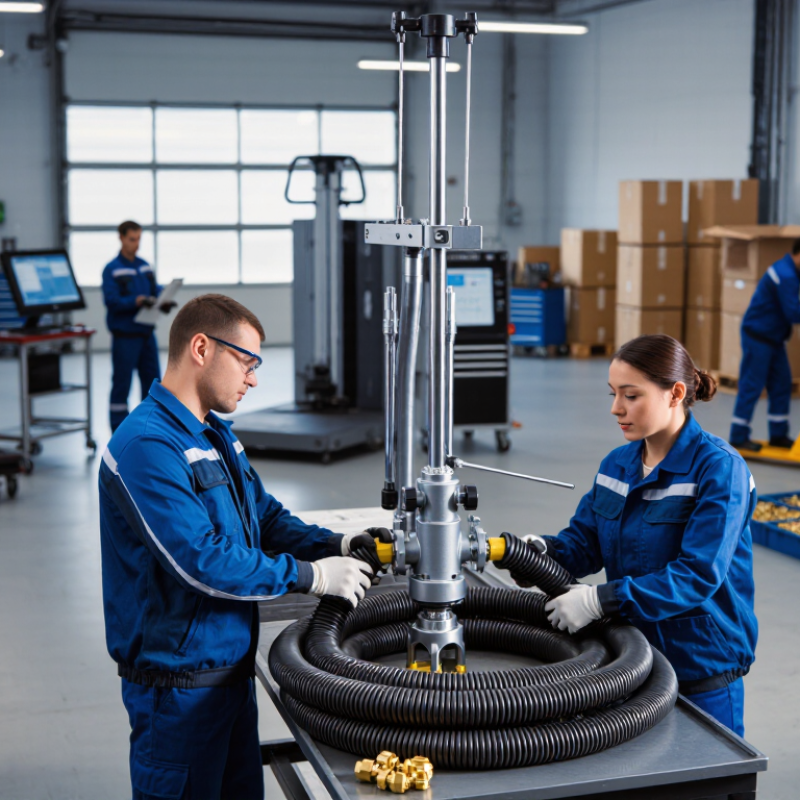
Reliable repair manufacturers usually inspect the hose cover, reinforcement, fittings, and fluid compatibility before cutting. Technicians measure the original assembly, clean the bore, and crimp fittings according to controlled specifications. Pressure testing is essential. A workshop may record crimp diameter, test pressure, hose batch, and production date for traceability. Standards such as SAE J517 and ISO 18752 provide useful technical references, although local procedures still vary.
The strongest Chinese suppliers invest in calibrated crimping machines, digital work orders, and rapid replacement inventories. Some support mobile repair teams near ports, factories, and construction sites. This reduces equipment downtime, often measured in hours rather than days. Small details matter.
A weakness remains uneven documentation. Some workshops provide excellent test records, while others depend heavily on technician experience. Buyers should examine material certificates, inspection methods, warranty terms, and emergency response capacity. The China Hydraulic Hose Repair Manufacturing industry is capable, but quality is not automatic. Careful auditing still matters.
China Top 10 Hydraulic Hose Repair Manufacturers - Hydraulic Hose Repair Manufacturing in China: Industry Overview
| No. | Benchmark Dimension | Representative Industry Data | Industry Significance |
|---|---|---|---|
| 1 | Core Product Scope | Hydraulic hose assemblies, replacement hoses, crimped fittings, adapters, quick couplings, protective sleeves, and on-site repair kits. | Manufacturers commonly combine hose production with cutting, skiving, crimping, pressure testing, and assembly services. |
| 2 | Common Hose Sizes | Typical production ranges cover approximately DN6 to DN51, or 1/4 inch to 2 inches, with larger diameters available for selected low- and medium-pressure applications. | A broad size range supports construction machinery, agricultural equipment, material handling, mining, and industrial maintenance. |
| 3 | Pressure Capability | Working-pressure ranges generally extend from about 20 bar for low-pressure return lines to approximately 420 bar for selected high-pressure compact or multi-spiral assemblies. | Actual pressure ratings depend on hose construction, inner diameter, temperature, fitting system, and the applicable standard. |
| 4 | Applicable Standards | Common reference standards include ISO 18752, ISO 1436, SAE J517, EN 853, EN 856, EN 857, and related fitting and test specifications. | Standard alignment helps buyers compare construction type, pressure rating, dimensions, impulse performance, and interchangeability. |
| 5 | Typical Construction | Oil-resistant synthetic rubber tubes with textile braid, one or two steel-wire braids, or multi-spiral steel reinforcement; covers are commonly abrasion- and weather-resistant rubber. | The reinforcement structure determines flexibility, pressure resistance, bend radius, impulse life, and suitability for mobile equipment. |
| 6 | Operating Temperature | Many general-purpose hydraulic hose assemblies are specified around −40°C to +100°C, while certain designs allow intermittent service temperatures up to approximately +125°C or +135°C. | Temperature limits must be checked against the fluid type, pressure, cover material, and fitting assembly before use. |
| 7 | Repair and Assembly Equipment | Standard workshop equipment includes hose saws, skiving tools, crimping machines, fitting gauges, cleaning systems, identification printers, and hydrostatic pressure-test benches. | Equipment capability affects assembly accuracy, repeatability, contamination control, and turnaround time for replacement hoses. |
| 8 | Quality-Control Practices | Common controls include dimensional inspection, crimp-diameter verification, fitting pull-off checks, cleanliness inspection, batch traceability, and pressure or impulse testing where specified. | Documented inspection records reduce assembly errors and support aftermarket, export, and safety-critical applications. |
| 9 | Typical Delivery Profile | Standard hose and fitting combinations are often available from stock; made-to-order assemblies commonly require several working days, depending on size, fitting configuration, testing, and order quantity. | Rapid repair service depends more on local inventory and assembly capacity than on hose manufacturing capacity alone. |
| 10 | Main Application Sectors | Construction and earthmoving machinery, agriculture, mining, port equipment, industrial automation, oil and gas equipment, transportation systems, and general plant maintenance. | Demand is supported by both original equipment production and the replacement market for aging or damaged hydraulic assemblies. |
Note: The figures and ranges above are representative industry benchmarks compiled from commonly used hydraulic hose standards and product specifications. Exact performance depends on the individual hose, fitting, assembly method, fluid, temperature, and application conditions.
Related Posts
-
Hydraulic Hose Repair Tips for DIY Success
-
How to Effectively Perform Hydraulic Hose Repair for Optimal Performance?
-
Best Hydraulic Power Pack Applications and Benefits?
-

Ultimate Checklist for Efficient Hydraulic Pump Repair Maintenance
-
2026 Best Pneumatic and Hydraulic Tools for Industrial Applications?
-
How to Choose the Right Hydraulic Components for Your Applications
Choose a global leader for your hydraulics solutions
How can we help you?
Call to 0034 943884600 Contact us